Wind damage roof repair is essential for preventing leaks, structural issues, and costly long-term damage after a storm impacts your home. Whether it’s a summer thunderstorm or a winter storm, the effects on your roofing system can lead to costly repairs if not caught early. In this guide, we cover how to identify, assess, and handle wind damage to your roof, so you can act quickly to prevent further issues.
Here’s what you’ll learn in this blog:
- Common types of wind damage
- Signs your roof may be compromised
- Steps to take after a storm
- When to call in a professional
- Tips for future wind damage prevention
What Is Wind Damage?
Wind damage occurs when strong wind gusts compromise your roofing materials, often during severe weather events like thunderstorms, hurricanes, or tornadoes. The force of the wind can peel back shingles, tear off flashing, send debris flying, or even shift structural elements beneath the surface.
The level of damage can vary significantly based on wind speed, roofing material quality, installation standards, and the age of your roof. Even moderate winds can cause damage if your roof has pre-existing wear or vulnerable areas.
Types of Wind Damage
Wind damage isn’t always immediately obvious, and it can take several forms. Here are the most common types homeowners should watch for:
Shingle Damage
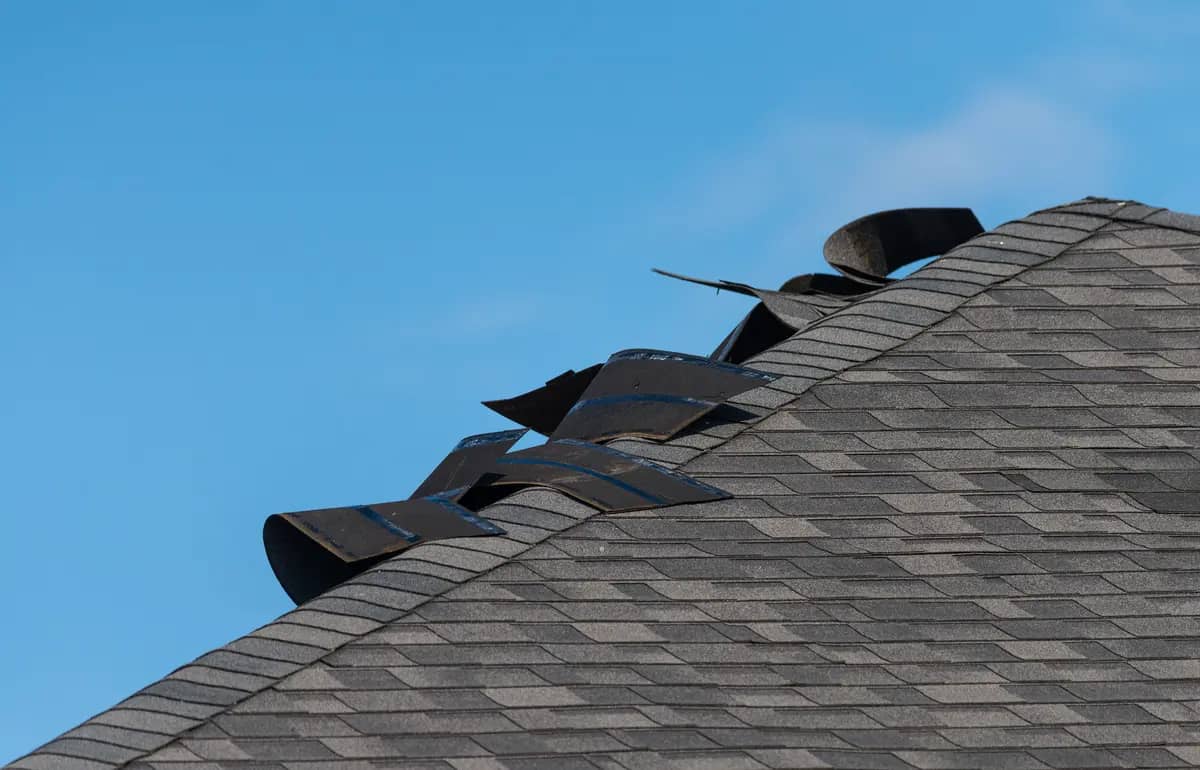
- Lifted shingles: High winds can break the adhesive seal and lift shingles upward, making them vulnerable to water infiltration.
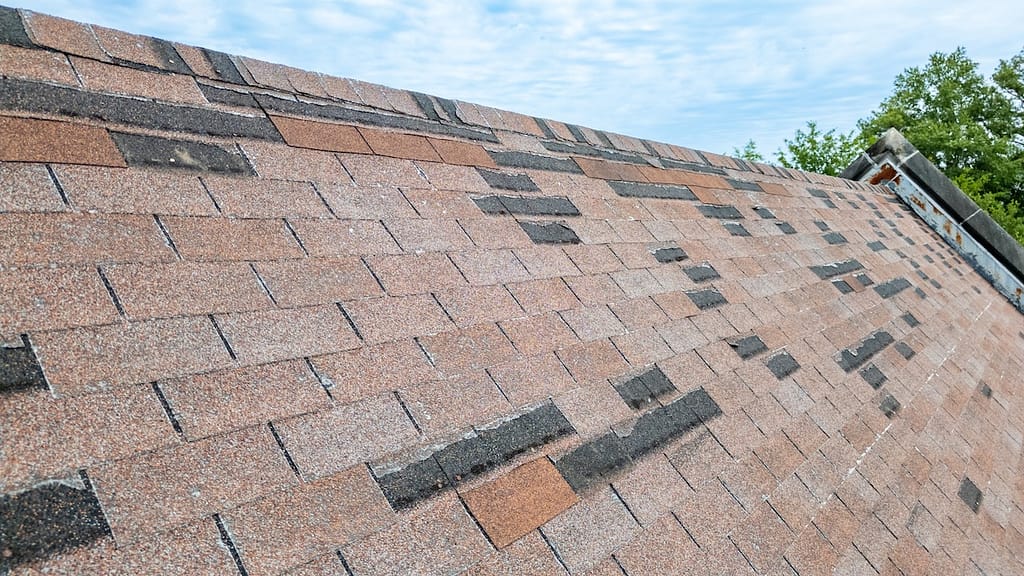
- Missing shingles: Entire shingles may be torn off, leaving bare patches that expose your underlayment or decking.
Debris Impact
- Falling branches: Tree limbs can snap off and crash onto your roof, denting or puncturing shingles and damaging structural components.
- Flying debris: Wind-borne objects like patio furniture, fencing, or loose siding can strike the roof and cause surface cracks or punctures.
Structural Damage
- Roof deck damage: If the deck beneath the shingles is compromised, it can lead to leaks, warping, or eventual collapse if left unaddressed.
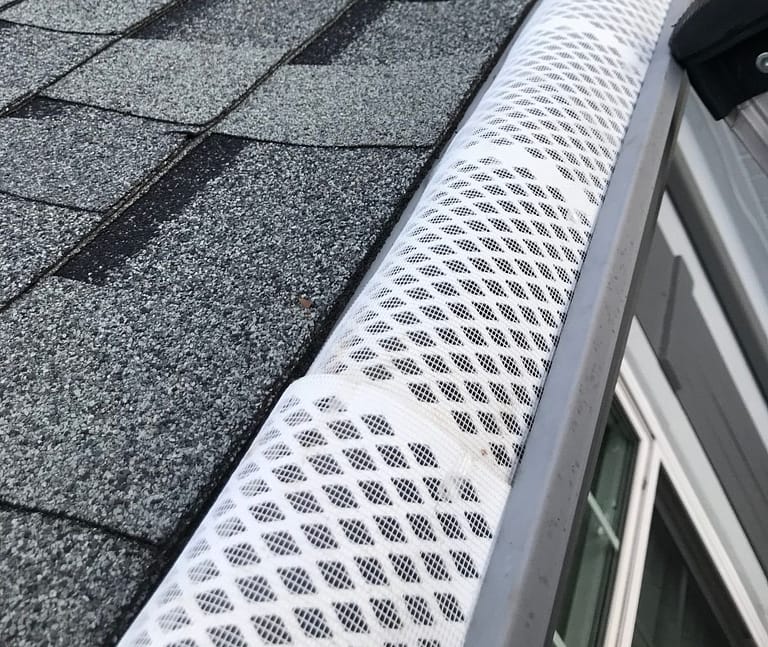
- Gutter and flashing damage: Wind can bend gutters, tear flashing, or disconnect these critical components from the roofing system.
6 Signs of Wind Damage
Spotting the signs of wind damage early can save you from a full roof replacement later. After a storm, be sure to inspect your property and look for the following:
- Visible shingle damage: Look for curling, lifted, cracked, or missing shingles. Discolored or inconsistent patches may also indicate granule loss.
- Interior leaks: Water stains on ceilings or walls are telltale signs that wind damage has allowed water into your home.
- Attic moisture or mold: Damp insulation or visible mold in the attic may point to hidden leaks from wind-related damage.
- Debris on the roof: Even if shingles seem intact, the presence of branches or other debris is a red flag that your roof may have taken a hit.
- Damaged flashing and gutters: Flashing around chimneys, skylights, and vents may be bent or loose. Gutters may be sagging or detached.
- Cracks and punctures: Closely inspect areas where different parts of your roof meet. These are common failure points.
5 Steps To Take If You Suspect Wind Damage
If you think your roof may have been affected by strong winds, follow these steps to protect your home and start the repair process:
- Conduct a Visual Inspection: Use binoculars to safely inspect your roof from the ground. Avoid climbing onto the roof unless you have proper safety equipment and experience.
- Document the Damage: Take photos of all visible issues and jot down notes about the time, date, and conditions during the storm. This documentation will be useful for insurance claims.
- Contact Your Insurance Company: Review your policy to determine if wind damage is covered. Most standard homeowners insurance policies include wind as a covered peril, but it’s important to understand your deductible and limits.
- Schedule a Professional Roof Inspection: Even if you plan to handle some repairs yourself, having a professional inspection ensures no hidden damage is overlooked. Roofing contractors can provide a detailed report and estimate.
- Perform Temporary Repairs: If there is a risk of water intrusion, consider placing a tarp over damaged areas until professional repairs can be completed. Avoid extensive DIY work unless you’re experienced.
Roof Repair Options: Minor vs. Major
Once you’ve confirmed wind damage, you’ll need to determine the best repair route. This depends on how widespread and severe the damage is.
Minor Repairs
- Shingle replacement: Individual damaged or missing shingles can usually be replaced. Be sure they match in color and material to preserve appearance and function.
- Flashing and gutter fixes: Loose or bent flashing can be re-secured or replaced. Gutters can be reattached or replaced as needed.
Major Repairs
- Decking replacement: If the roof deck is warped, soft, or damaged, sections may need to be replaced.
- Structural reinforcement: Severe wind damage may require repairs to trusses or rafters. A structural engineer may need to assess the extent.
- Full roof replacement: If damage covers more than 25–30% of the roof, or the roof is already nearing the end of its lifespan, replacement may be more cost-effective.
Preventing Future Wind Damage
Taking preventative steps now can help minimize roof damage during future storms. Here are some tips to safeguard your home:
- Schedule annual roof inspections: Early detection of wear and tear reduces your risk of failure during a storm.
- Keep trees trimmed: Remove overhanging branches and keep trees away from your home.
- Secure outdoor items: Patio furniture, grills, and decor should be anchored or brought inside when storms are forecasted.
- Upgrade roofing materials: Consider impact-resistant shingles and high-wind-rated roofing systems if you’re already due for replacement.
- Install wind-resistant features: Hurricane clips, upgraded fasteners, and reinforced flashing help keep everything in place during strong winds.
Roof Material Wind Ratings: A Comparison
| Material Type | Wind Resistance Rating | Durability | Maintenance Needs |
| Asphalt Shingles | Up to 110 mph | Moderate | Low |
| Architectural Shingles | Up to 130 mph | High | Low |
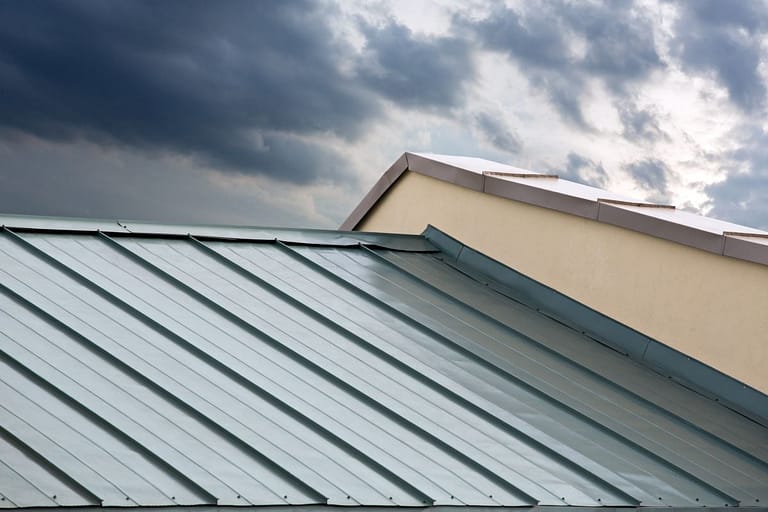
| Metal Roofing | Up to 160 mph | Very High | Low |
| Clay Tile Roofing | Up to 100 mph | High | Moderate to High |
| Wood Shake Roofing | Up to 120 mph | Moderate | High |
Roof material choice plays a major role in how well your home stands up to wind. If you live in an area prone to storms, talk to your roofer about wind-resistant upgrades.
Get Expert Help from O’Donnell Roofing
Wind damage to your roof is not something to ignore. Even small issues can turn into big problems when left unchecked. The best way to protect your investment is with timely inspections and professional repairs.
At O’Donnell Roofing Co., we help homeowners in Chester County and surrounding areas spot hidden wind damage, navigate insurance claims, and complete high-quality roof repairs or replacements. Whether you’re dealing with recent storm damage or want to strengthen your roof before the next season, we’re here to help.
Contact us today to schedule your inspection and keep your roof in top shape for 2026 and beyond.