If you manage or own a commercial building with a flat or low-slope roof, it’s critical to understand rubber roof repair—and how to identify signs of trouble before they turn into costly emergencies. EPDM (ethylene propylene diene monomer) rubber roofing is a go-to choice for commercial properties because of its affordability, durability, and weather resistance. But even the most reliable roofing systems require attention over time.
In this guide, we’ll walk you through:
- What makes rubber roofing ideal for commercial buildings
- The top 7 signs your commercial roof needs repair
- How to act quickly to minimize business disruption and facility damage
Let’s explore what to watch for so you can stay ahead of expensive repairs.
Why Commercial Buildings Use Rubber Roofing
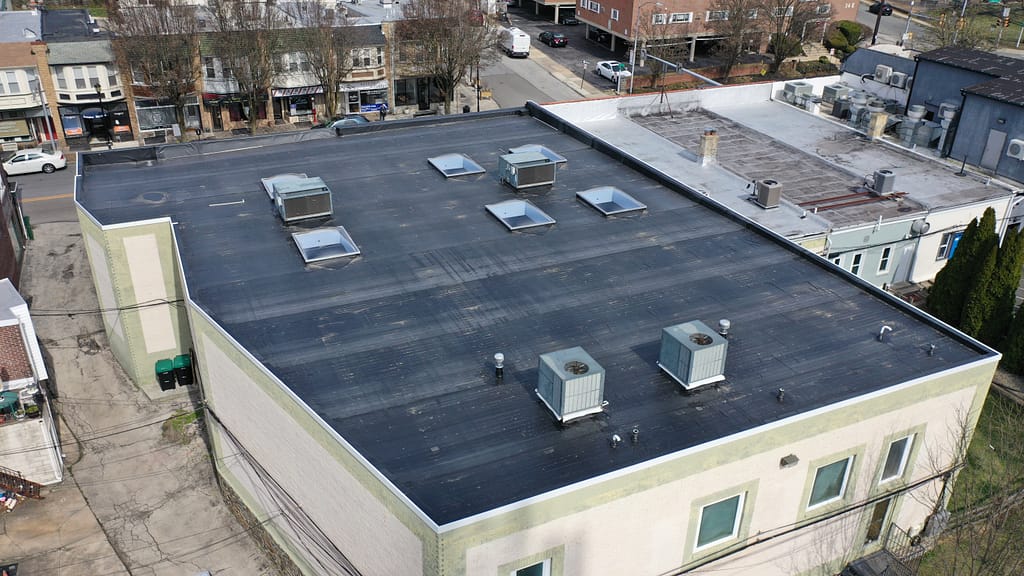
EPDM rubber roofing is one of the most popular commercial flat roofing systems in the U.S. It’s lightweight, energy-efficient, and highly flexible—making it ideal for the large surface areas and complex layouts of many commercial buildings.
Most EPDM systems are installed in one of three ways:
- Fully adhered: Bonded directly to insulation or decking with adhesive
- Mechanically fastened: Secured with fasteners and plates, often at seams
- Ballasted: Held in place by river rock or pavers for added weight and UV protection
When properly installed and maintained, commercial rubber roofs can last 20 to 30 years. But heavy foot traffic, rooftop equipment, harsh weather, and UV exposure can all take a toll.
Why Timely Rubber Roof Repair Matters for Businesses
Delaying repairs can lead to significant operational and financial risks:
- Water intrusion that damages inventory, equipment, or tenant spaces
- Safety hazards from wet floors or ceiling collapse
- Insulation degradation that spikes heating and cooling costs
- Insurance claims or liability issues from building damage
For commercial property owners, catching roof issues early is about more than avoiding structural damage—it’s about protecting your investment, operations, and reputation.
7 Signs You Need Rubber Roof Repair Immediately
Even well-installed EPDM roofing systems will eventually show signs of aging or stress. Identifying issues early can make the difference between a simple patch job and a full roof replacement. Here are seven clear indicators that your rubber roof needs attention—and fast.
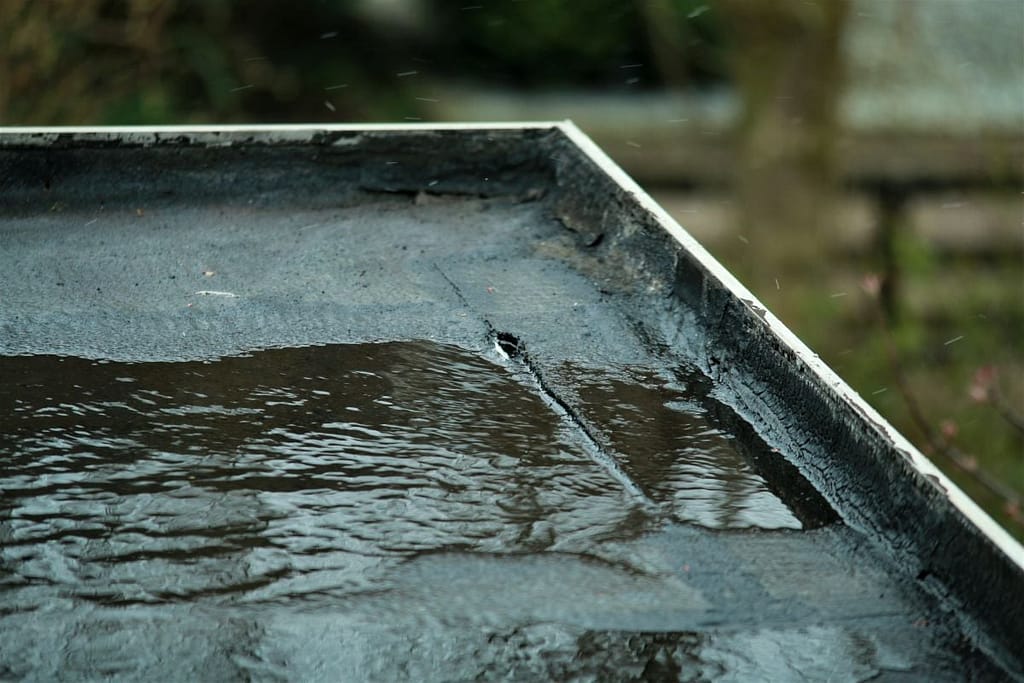
1. Persistent Ponding Water
- Definition: Water that remains pooled on the surface for more than 48 hours after rain.
- Why it matters: Standing water increases membrane wear and leads to leaks, especially near seams and penetrations.
Commercial roofs often have large flat areas where drainage is critical. If your roof isn’t draining properly, it needs immediate evaluation to avoid membrane failure.
2. Visible Cracking or Splitting
- Definition: Fractures or tears in the rubber, often near seams, flashing, or HVAC curbs.
- Why it matters: Cracks allow water to reach the underlying insulation and structure, potentially damaging internal systems or disrupting tenant operations.
Seasonal temperature shifts and rooftop equipment vibrations are common causes of this wear on commercial roofs.
3. Membrane Blisters or Bubbles
- Definition: Raised sections of the roof surface that indicate trapped moisture or air.
- Why it matters: Blisters can rupture and weaken adhesion, creating entry points for water.
This is often caused by poor installation or improper sealing during repairs. Left untreated, blisters grow larger and compromise the integrity of the entire roof.
4. Lifting or Loose Edges
- Definition: Perimeter edges or flashing pulling away from the surface.
- Why it matters: These areas are vulnerable to wind uplift and can lead to large sections of the roof detaching during storms.
Loose edges are especially dangerous on commercial roofs with high exposure or foot traffic near the perimeter.
5. Staining, Algae, or UV Degradation
- Definition: Discoloration, chalking, or black streaks along the membrane.
- Why it matters: UV degradation breaks down the rubber and reduces its waterproofing ability.
This is a sign the membrane is aging or was exposed to harsh chemicals. It may still be functioning but is nearing the end of its service life.
6. Interior Water Leaks or Ceiling Stains
- Definition: Water infiltration visible on ceiling tiles, walls, or electrical systems.
- Why it matters: Interior damage signals that the membrane has failed somewhere—potentially near roof penetrations or seams.
Leaks inside a commercial space can interrupt operations and create liability risks for tenants or staff. They require urgent attention.
7. Aging Roof Over 15 Years Old
- Definition: The roof is approaching or beyond its average expected lifespan.
- Why it matters: Older rubber roofs are more likely to suffer adhesive breakdown, shrinkage, or membrane fatigue.
Even if no visible damage is present, aging roofs should be inspected regularly to prevent surprise failures that disrupt business.
Commercial Roof Repair vs. Replacement
Not every issue requires a full replacement. Commercial rubber roof repair may include:
- Resealing seams with new adhesive or tape
- Replacing flashing around HVAC units and skylights
- Applying rubber patch kits to cracked or blistered areas
- Improving drainage or adding crickets to redirect water
An experienced commercial roofer can determine whether a targeted repair or a complete retrofit is the best approach for your building.
What to Expect from a Commercial Roof Inspection
When you schedule a commercial rubber roof inspection, here’s what should happen:
- Visual assessment of the entire membrane and flashings
- Moisture scan (infrared or core samples) to check for hidden water
- Drainage review to confirm slope and flow
- Detailed report with photos, repair recommendations, and cost estimate
Partnering with a licensed contractor like O’Donnell Roofing Co. ensures your inspection is thorough and compliant with warranty and insurance requirements.
Cost of Rubber Roof Repair for Commercial Buildings
Repair costs vary depending on the size and condition of the roof:
- Spot patching or seam repair: $0.75–$1.50 per square foot
- Blister removal and replacement: $1.50–$3.00 per square foot
- Full resurfacing or membrane overlay: $4.00–$7.00 per square foot
Proactive maintenance saves money long-term by avoiding emergency repairs and preserving your roof’s warranty.
Preventative Maintenance Tips for Commercial Roofs
Reduce long-term costs and downtime with these best practices:
- Schedule semi-annual inspections—spring and fall are ideal
- Clear drains and scuppers regularly to avoid ponding
- Avoid unnecessary foot traffic to prevent punctures
- Log repairs and inspections to track wear over time
- Address small problems quickly before they escalate
Professional maintenance plans are available to keep your roof in top condition and reduce your liability exposure.
Protect Your Investment with Timely Rubber Roof Repair
Ignoring issues on a commercial rubber roof can lead to major damage, operational disruptions, and lost revenue. If you’ve noticed pooling water, cracks, or leaks, or if your roof is nearing the 20-year mark, it’s time to act.
Contact O’Donnell Roofing Co. for a professional inspection and repair plan tailored to your building. With over a century of experience in commercial roofing, we know how to keep your facility protected and operational year-round.
Take the guesswork out of rubber roof repair. Get expert help, fast turnaround, and long-term peace of mind from a contractor you can trust.