If you’re planning a new build, addition, or major roof replacement, understanding roof framing is essential to making informed decisions. Roof framing is the structural backbone that supports the entire roofing system, affects the shape and style of your roof, and influences how well it performs under various weather conditions.
Whether you’re working on a residential or light commercial project in Downingtown and surrounding areas, getting familiar with framing types, materials, and their strengths will help ensure your roof is built to last.
This guide breaks down:
- The five most common types of roof framing
- Key material options and structural components
- How framing choices affect durability and design
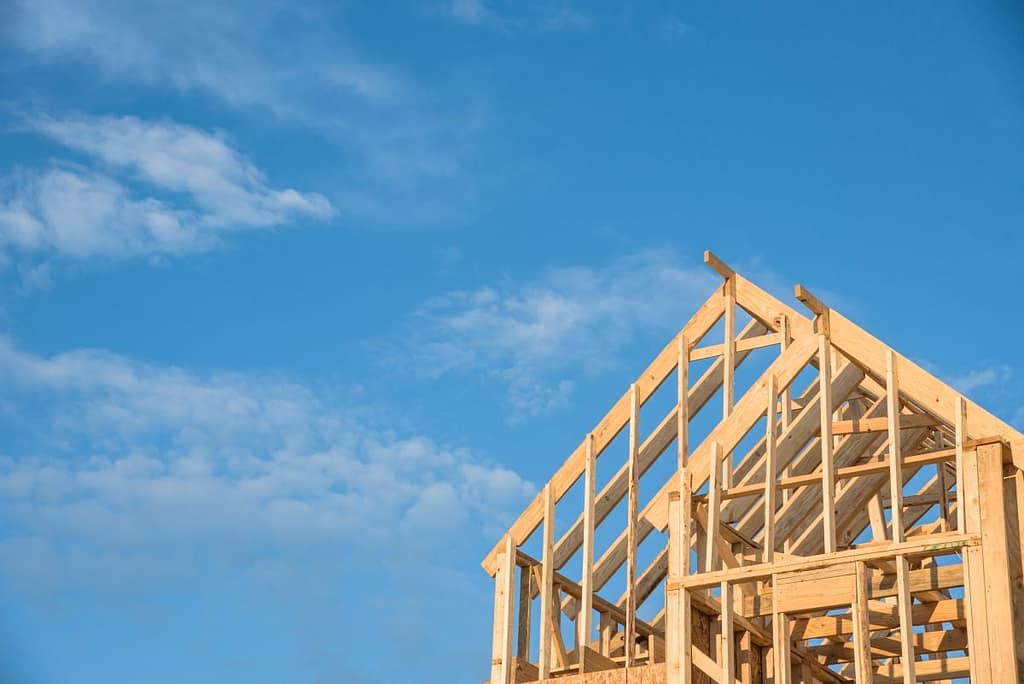
5 Types of Roof Framing
There are several common structural systems used to support roofs. Each has its advantages based on budget, building design, and desired attic space. Here are five of the most frequently used roof framing methods:
1. Rafters (Stick Framing)
Rafters are a traditional framing method where individual angled boards (rafters) extend from the ridge beam at the top down to the exterior walls.
- Customization: Rafters are cut and installed on-site, allowing for custom roof designs and adjustments.
- Attic space: This method creates open attic space that can be used for storage or finished living areas.
- Labor: Requires skilled labor and more time compared to prefab methods.
Stick framing is ideal for homes with complex rooflines or where flexibility in design is a priority.
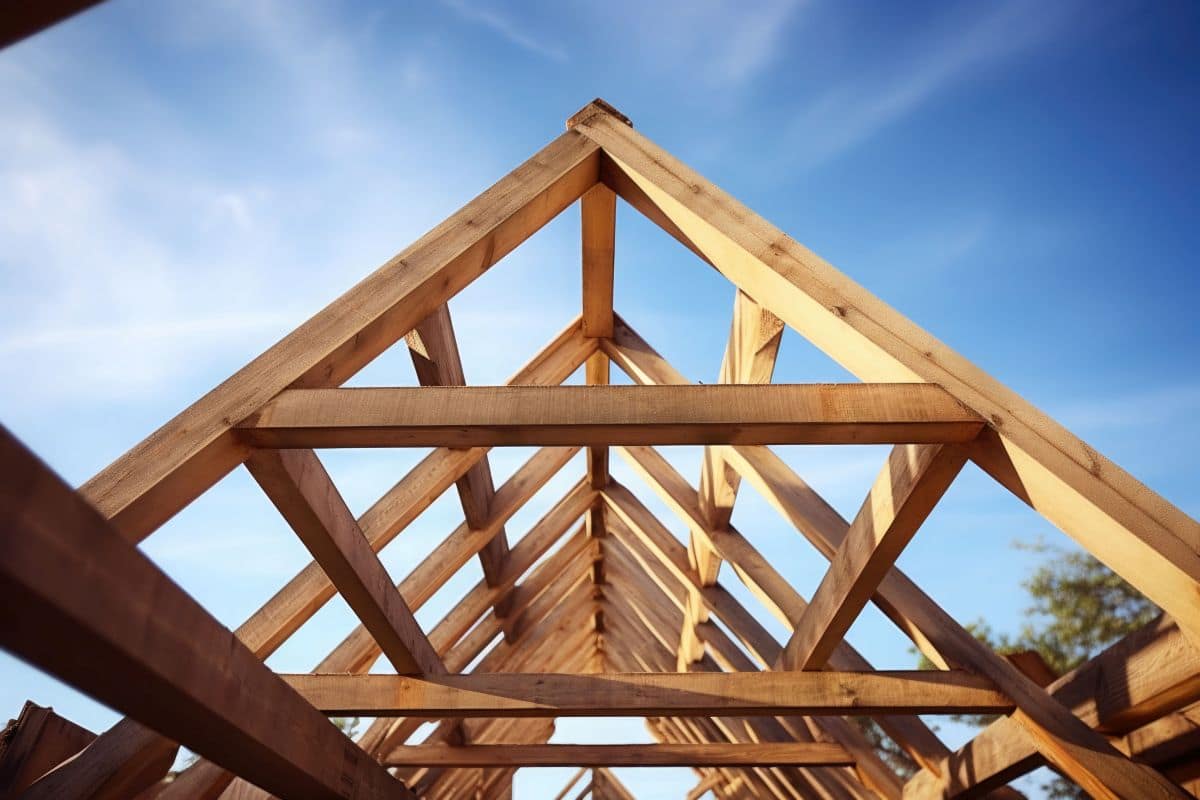
2. Trusses
Trusses are pre-engineered triangular framing units that are manufactured off-site and delivered to the construction site ready to install.
- Speed: Faster to install than rafters, making them ideal for production builds or tight timelines.
- Strength: Distributes loads evenly across the structure, which makes trusses efficient and reliable.
- Cost: Usually more cost-effective due to reduced labor and time on site.
The tradeoff is that trusses limit interior modifications like vaulted ceilings or attic conversions, since they often fill the space with webs of internal bracing.
3. Hip Roof Framing
A hip roof has slopes on all four sides that come together at the top to form a ridge or point. Framing this type of roof is more complex due to the angles involved.
- Stability: Offers excellent resistance to wind and is ideal for hurricane or storm-prone areas.
- Drainage: With four slopes, hip roofs shed water and snow efficiently.
- Complexity: Framing requires hip rafters, jack rafters, and detailed cuts, which increases labor.
Hip roof framing is commonly used on colonial, French-style, and ranch homes for its stability and aesthetic symmetry.
4. Gambrel Roof Framing
Gambrel roofs are most often seen on barns but are also used in residential architecture for their spacious upper levels.
- Shape: Two-sided roof with two slopes on each side. The lower slope is steeper, and the upper slope is shallower.
- Functionality: Offers the most attic space or headroom, often used for lofts or extra storage.
- Aesthetic: Distinctive silhouette that adds visual interest.
Framing a gambrel roof involves precise measurements and connections to handle the unique stress distribution of the steeper lower slope.
5. Flat Roof Framing
While no roof is truly flat, this framing style uses a very low slope and is commonly used for commercial buildings or modern residential designs.
- Simplified construction: Easier and faster to frame since it requires fewer angles and components.
- Usable space: Ideal for rooftop decks, solar panels, or HVAC systems.
- Drainage considerations: Requires special attention to internal drains or scuppers to manage water runoff.
Flat roof framing is typically done with steel beams or engineered lumber capable of spanning long distances without sagging.
Common Roof Framing Materials
Each framing system relies on strong, stable materials to support loads, resist weather, and maintain the roof’s shape over time. Common options include:
Wood (Dimensional Lumber)
- Affordable: Most commonly used in residential framing for cost-effectiveness.
- Versatile: Can be cut and adjusted easily on-site.
- Limitations: Susceptible to rot, warping, or pest damage if not protected.
Engineered Wood (LVL, Glulam)
- Strength: Manufactured for consistent performance and long spans.
- Durability: Less prone to warping or defects than natural lumber.
- Uses: Often used in trusses, beams, and critical load-bearing elements.
Steel
- Load capacity: Strongest option, used primarily in commercial or large-scale construction.
- Longevity: Resistant to moisture, pests, and fire.
- Cost: Higher material and installation costs than wood.
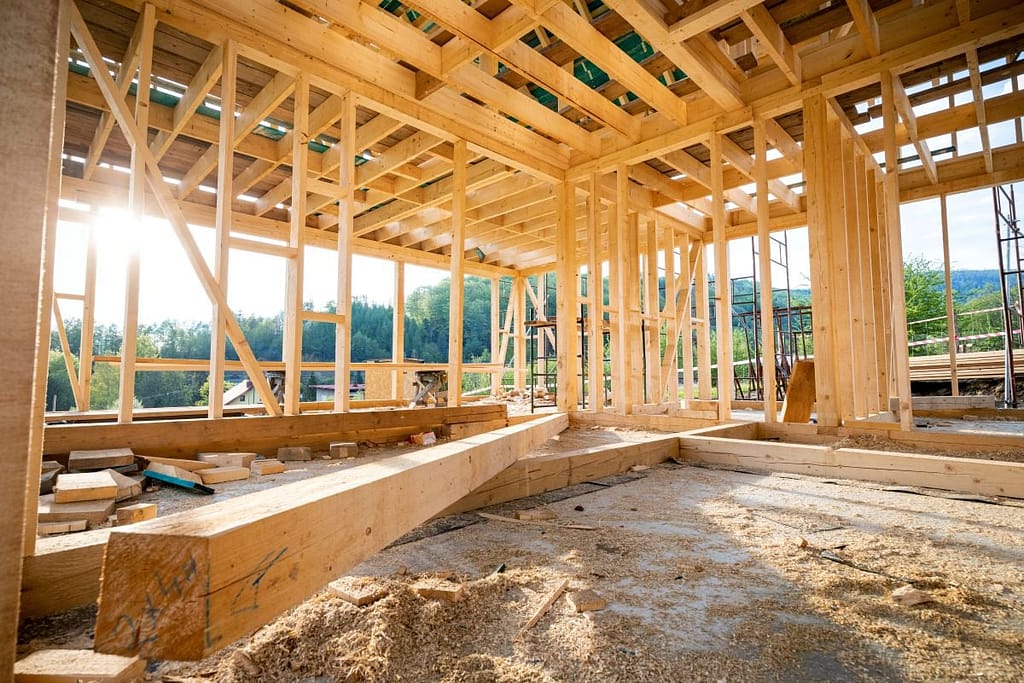
Structural Basics: What Else Supports Your Roof?
Framing is just one part of the overall roofing structure. Here are other critical components:
- Ridge board or ridge beam: The horizontal board at the top where rafters meet.
- Ceiling joists: Run parallel to rafters to support ceiling loads and tie walls together.
- Collar ties: Horizontal members placed higher in the roof to prevent rafters from spreading.
- Sheathing: Plywood or OSB panels that cover the rafters or trusses and provide a surface for roofing materials.
- Support walls or posts: Carry the weight of beams and distribute loads downward into the foundation.
Each of these elements must be sized and placed correctly for the roof to function safely and effectively.
How Roof Framing Affects Roof Performance
Choosing the right framing approach is not just about aesthetics. It impacts how well your roof handles:
- Wind uplift
- Snow and water load
- Thermal movement
- Interior space planning
- Roofing material compatibility
For example, complex or steep framing systems may not be ideal for heavier roofing materials like slate. Likewise, if you’re planning to finish attic space, stick framing may be preferable over trusses.
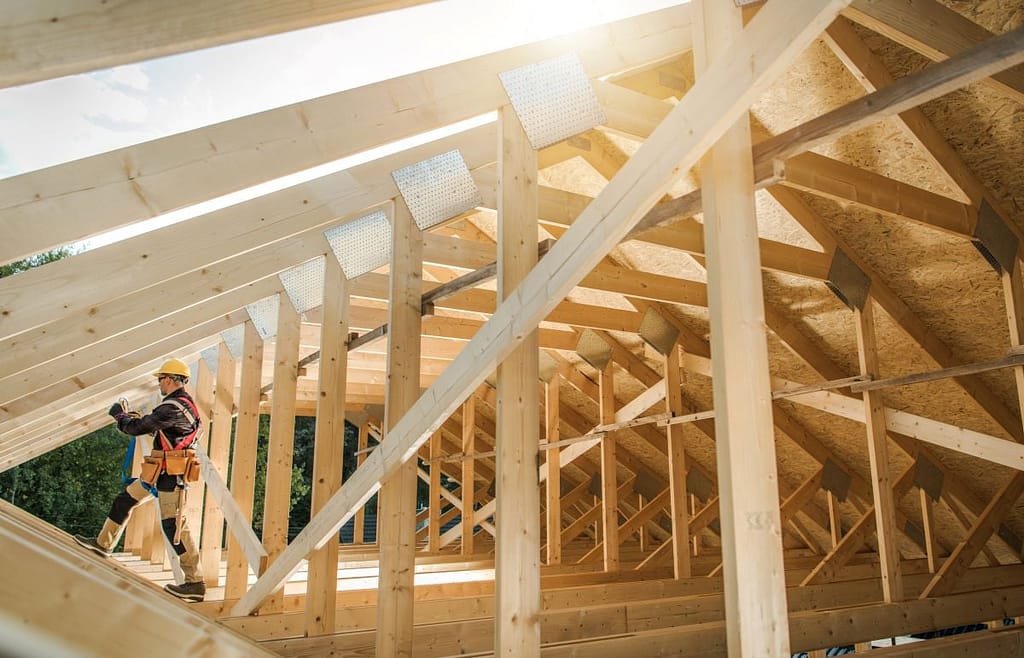
Build the Right Framework for a Long-Lasting Roof
Roof framing is the structural foundation of your roofing system. Whether you’re using rafters, trusses, or a specialized layout like a hip or gambrel, choosing the right approach will affect everything from construction costs to long-term performance.
If you’re building or renovating in Downingtown and surrounding areas, O’Donnell Roofing Co. can help you evaluate your design goals, budget, and structural needs to determine the best framing system.
Contact us today and get expert guidance on how to frame a roof that stands the test of time.