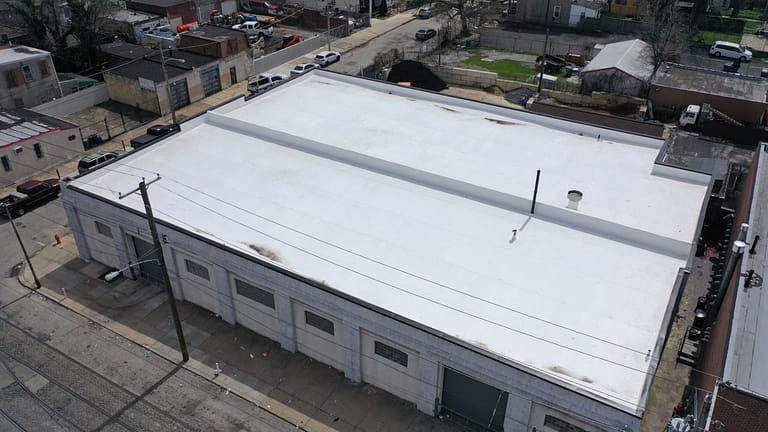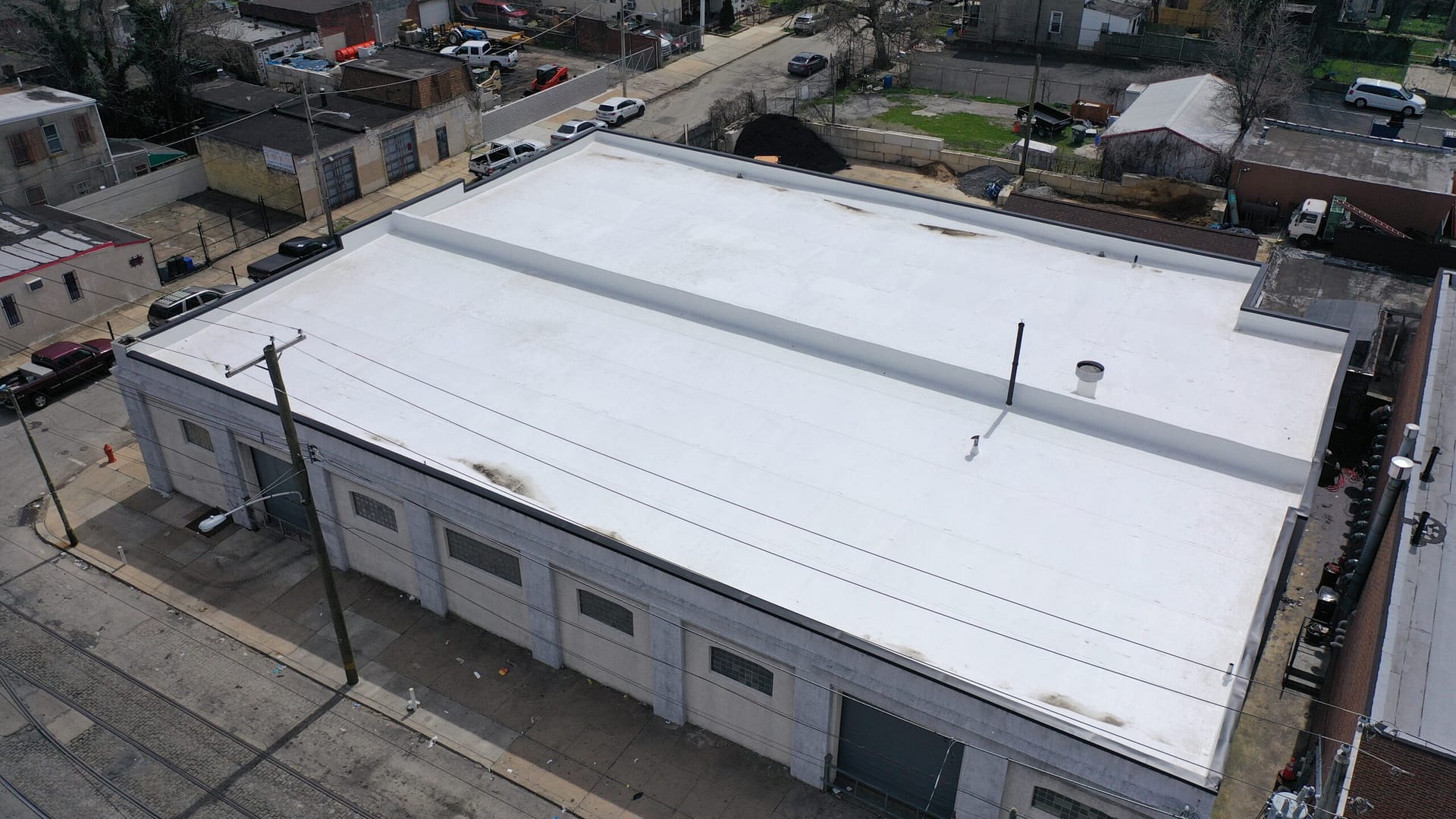
If you’re managing or upgrading a commercial building, understanding the benefits and limitations of a PVC roofing membrane can help you make a smart, long-term investment. PVC (polyvinyl chloride) is a single-ply roofing solution that’s known for its strength, energy efficiency, and chemical resistance—making it a popular choice for flat or low-slope commercial roofs.
In regions like Exton and surrounding areas, where commercial buildings face both seasonal temperature swings and occasional heavy rainfall, PVC roofing stands out as a durable and cost-effective system.
This guide covers:
- What PVC roofing membranes are and how they function
- 7 pros and cons of using PVC for commercial properties
- Key considerations during installation
Let’s take a closer look at whether PVC roofing is the right fit for your facility.
What Is PVC Roofing Membrane?
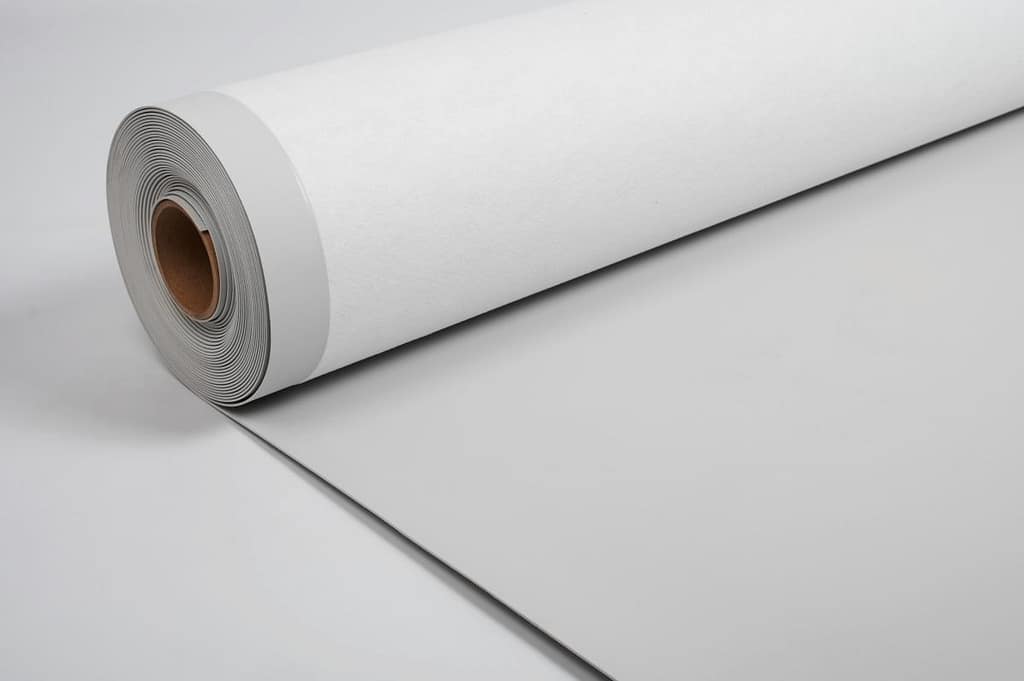
PVC is a thermoplastic membrane typically installed in large rolls across commercial rooftops. It consists of two layers of PVC material reinforced with polyester or fiberglass to provide extra durability and flexibility.
The membrane is either:
- Mechanically fastened: Screwed into the roof deck using plates and fasteners
- Fully adhered: Glued directly to the insulation or substrate for a tight seal
- Ballasted: Weighted down with river rock or pavers (less common for PVC)
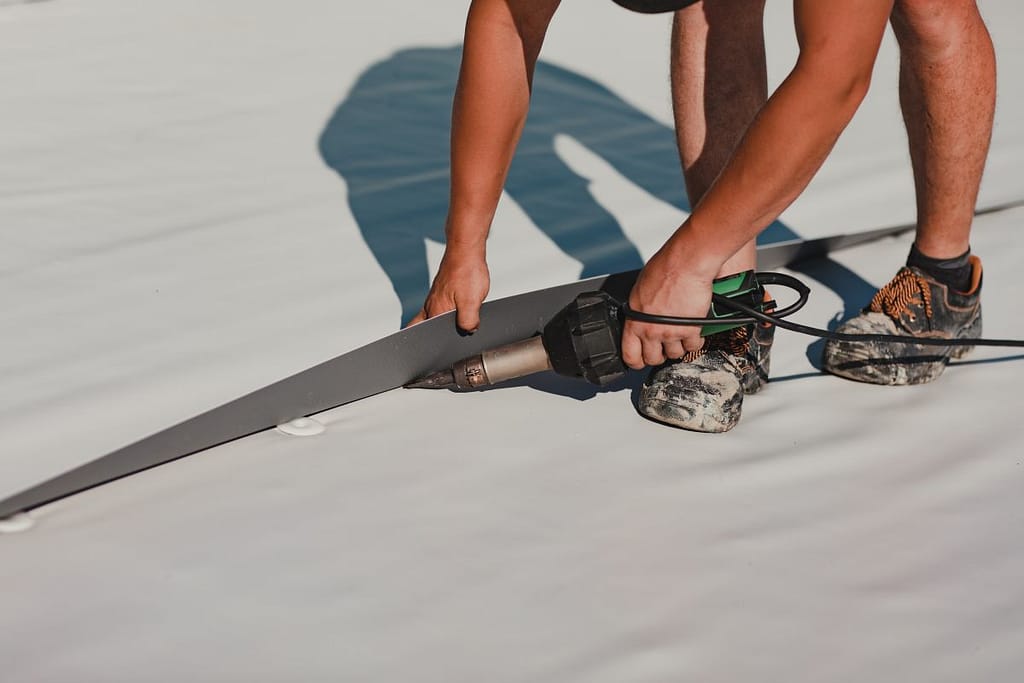
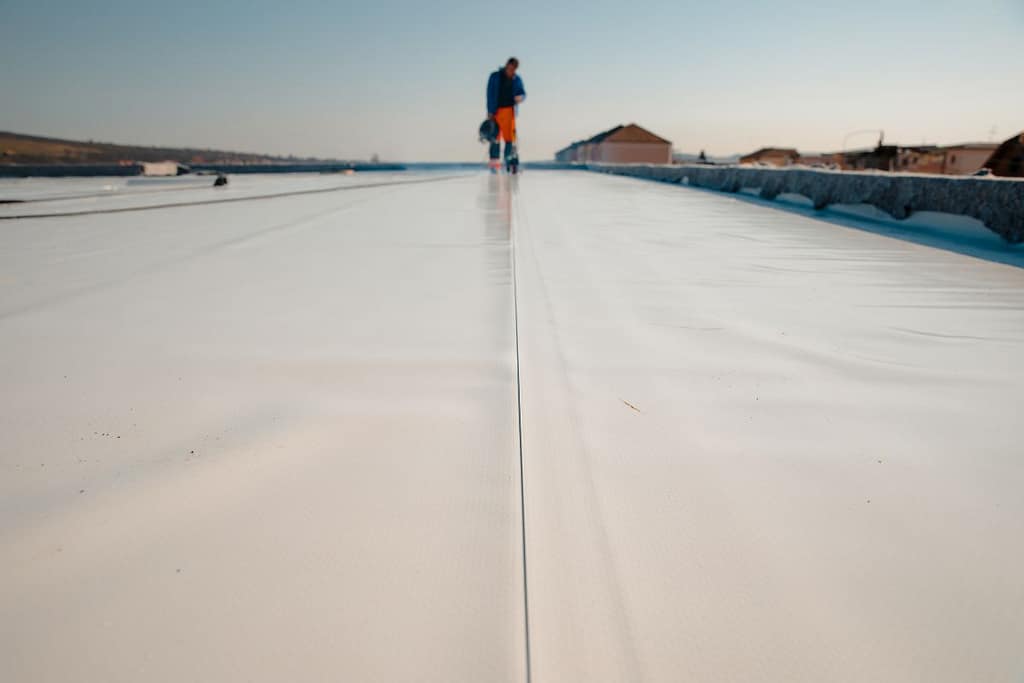
It’s heat-welded at the seams, which makes it more watertight than systems that rely on adhesives or tapes. When properly installed, PVC membranes can last 20–30 years with minimal maintenance.
7 Pros and Cons of PVC Roofing Membranes
PVC roofing systems are highly regarded for their unique performance characteristics—but they’re not perfect for every building. Here are seven key pros and cons to consider before deciding if this single-ply membrane is right for your commercial property.
1. Strong Waterproofing Performance
- Pro: PVC offers excellent resistance to ponding water and wind-driven rain thanks to its welded seams and smooth surface.
- Impact: Ideal for flat roofs that are prone to pooling water or storm exposure.
2. Chemical and Grease Resistance
- Pro: Unlike some other materials, PVC resists oils, chemicals, and animal fats—making it perfect for restaurants, factories, and other facilities with rooftop exhaust systems.
- Impact: Reduces long-term membrane deterioration and lowers repair needs.
3. Energy Efficiency
- Pro: Most PVC membranes are white or light-colored, reflecting UV rays and helping to reduce HVAC costs during hot months.
- Impact: Helps commercial buildings meet LEED standards and qualify for energy rebates.
4. Fire and Wind Resistance
- Pro: PVC membranes have a high fire rating and can withstand uplift from strong winds.
- Impact: Safer for high-risk or storm-prone areas, and may help with insurance premiums.
5. Durable and Long-Lasting
- Pro: With proper care, a PVC roof can last up to 30 years.
- Con: While durable, it can become brittle with age and may crack in cold climates if not maintained.
- Impact: Regular inspections and preventive maintenance are key to maximizing lifespan.
6. Higher Upfront Cost
- Con: PVC is typically more expensive than TPO or EPDM roofing systems.
- Impact: May require more upfront budget but can pay off over time through energy savings and reduced repairs.
7. Professional Installation Required
- Con: PVC requires heat-welding and specific expertise during installation.
- Impact: Mistakes can void warranties, so always hire certified commercial roofing professionals like O’Donnell Roofing Co.
Installation Considerations for PVC Roofing
To get the most out of your PVC system, installation quality matters just as much as the material itself.
Here’s what to look for during the process:
- Substrate preparation: The roof deck must be clean, dry, and properly sloped for drainage.
- Insulation compatibility: PVC can be installed over polyiso or EPS insulation, but must use compatible adhesives or fasteners.
- Seam welding: All seams should be hot-air welded, not glued or taped.
- Edge termination: Perimeter terminations must be reinforced to withstand wind uplift.
- Flashing and penetrations: Proper detailing around drains, HVAC units, and skylights is critical.
Work with an experienced commercial roofing company that understands PVC-specific requirements, manufacturer specs, and local building codes.
How Much Does PVC Roofing Cost?
Costs for commercial PVC roofing vary based on roof size, complexity, and insulation thickness:
- Materials only: $5.00–$7.00 per square foot
- Fully installed: $7.00–$12.00 per square foot
While more expensive than TPO or EPDM initially, PVC often offsets its cost through longer life expectancy and lower maintenance over time.
Is PVC Roofing Right for Your Building?
PVC is ideal for:
- Restaurants, factories, or labs with chemical exposure
- Commercial properties prioritizing energy efficiency
- Large flat roofs with potential for ponding water
- Buildings in high-wind or storm-prone areas
If your building in Exton or surrounding areas needs a roofing system that performs under pressure, PVC is a top-tier choice.
However, if budget is tight or chemical exposure isn’t a factor, TPO or EPDM may be more cost-effective. A roofing professional can help you compare options based on your building’s needs.
Invest in Long-Term Performance
PVC roofing membranes offer superior protection, energy savings, and chemical resistance—making them a smart choice for many commercial facilities.
To get the most value from your investment, choose a roofing partner who understands commercial systems, proper installation practices, and local building codes.
Contact O’Donnell Roofing Co. for a free commercial roof inspection in Exton and surrounding communities. We’ll help you determine whether PVC is right for your building—and ensure it’s installed for maximum performance and longevity.