

Metal roof underlayment is the critical layer beneath your metal panels that protects your home from moisture, temperature swings, and wind-driven rain. Choosing the right type is one of the most important decisions in a metal roofing project, because the wrong underlayment can shorten your roof’s lifespan while the right one keeps your home dry, insulated, and structurally sound for decades. This guide breaks down the main underlayment types, explains the high-temperature requirement unique to metal roofs, and helps you decide which is best for your home. Here is what you will learn:
- The main types: How felt, synthetic, and peel-and-stick underlayment compare.
- Why heat matters: The high-temperature rating that metal roofs specifically require.
- How to choose: Which underlayment fits your climate, roof slope, and budget.
Getting this foundation right is what keeps your home dry, insulated, and structurally sound for the life of the roof in Chadds Ford and surrounding areas.
Why Does Underlayment Matter for Metal Roofs?
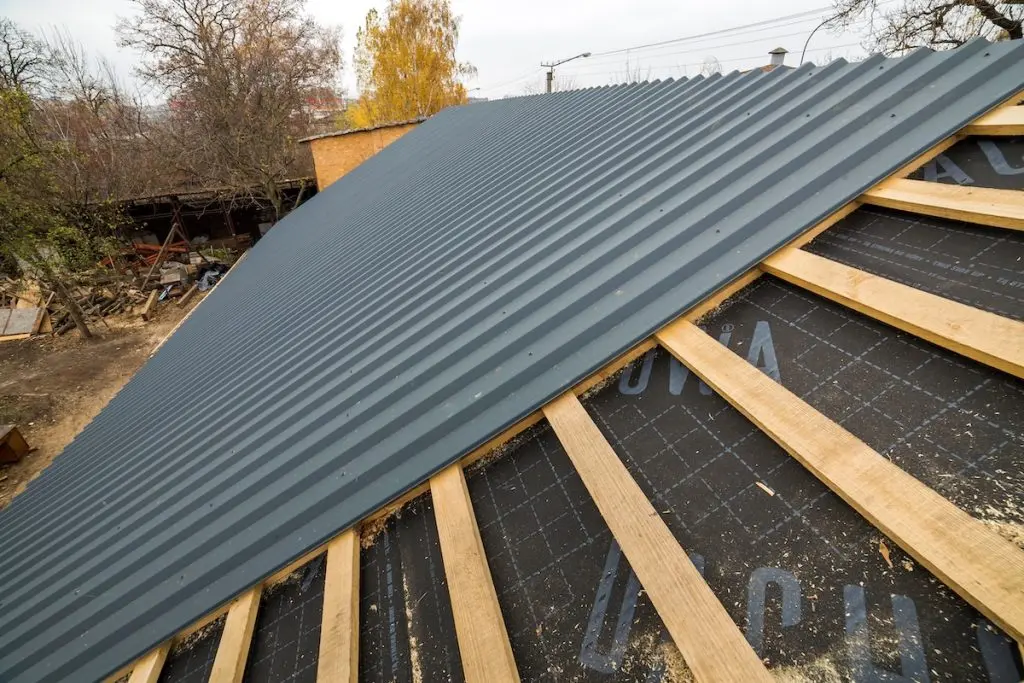
Underlayment is the unsung hero of a metal roof system, providing a critical secondary layer of protection beneath the panels. Understanding its role explains why the right choice is so important.
What Does Metal Roof Underlayment Do?
Metal roof underlayment protects the roof deck from moisture, improves energy efficiency, and extends the life of the entire roof system. Metal panels expand and contract with temperature shifts, and that movement can allow moisture to sneak in, so a reliable underlayment absorbs or redirects water before it causes mold, rot, or structural damage. The right underlayment also reduces heat transfer into the attic and acts as a secondary barrier during storms. In short, it is the insurance policy that shields everything beneath your panels in Chadds Ford and surrounding areas.
- Moisture control: Redirects water before it causes mold, rot, or structural issues.
- Energy efficiency: Reduces heat transfer to keep the attic cooler.
- Secondary barrier: Provides backup protection during storms and harsh weather.
- Longer roof life: Shields the deck and structure to extend the roof’s lifespan.
What Are the Main Types of Metal Roof Underlayment?
There are three main types of underlayment used with metal roofs, and the best choice depends on your climate, budget, and roof structure. Each has distinct strengths and limitations.
Felt Underlayment
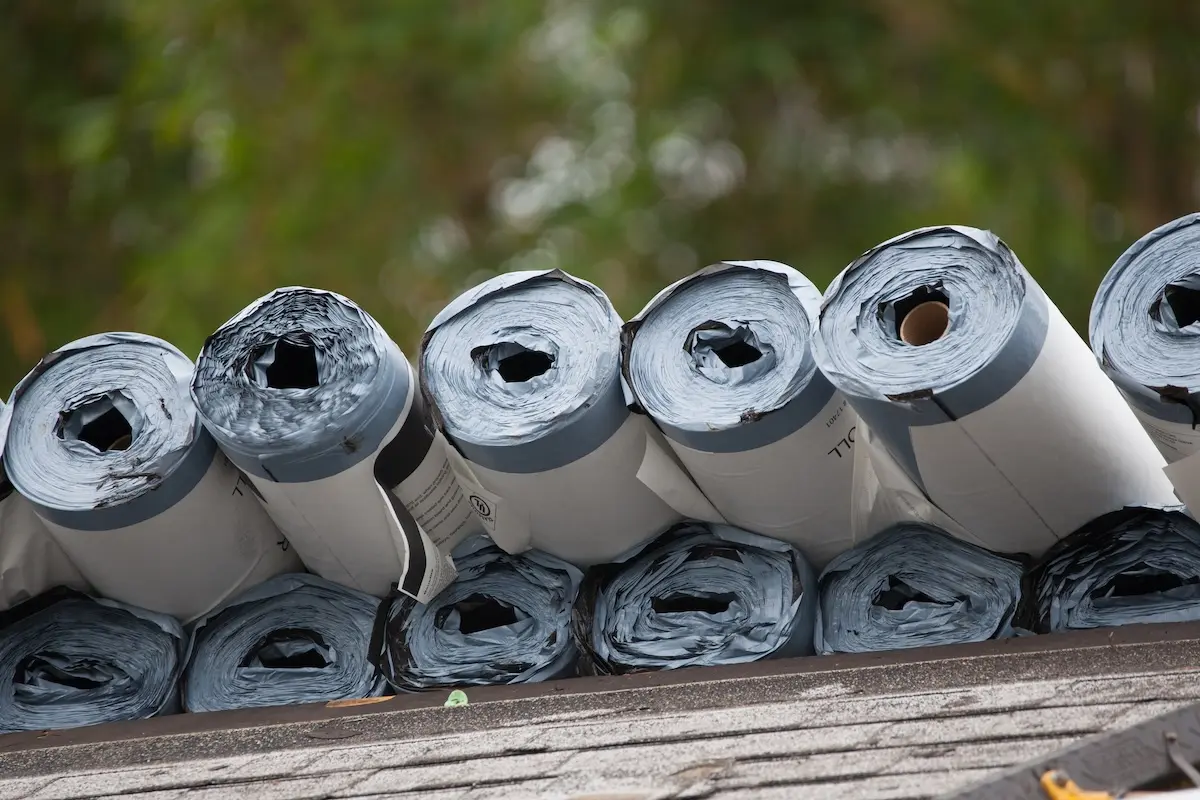
Felt underlayment is the traditional option, made from an organic or fiberglass base saturated in asphalt, and for metal roofs a heavier 30-pound felt (or two layers of 15-pound) is typically recommended. It is affordable, widely available, and works acceptably in dry, mild climates, which is why it remains in use despite newer alternatives. However, felt tears more easily under foot traffic, absorbs moisture, and degrades faster than synthetics, and it does not handle the high heat of a metal roof as well. For most metal roofing today, felt is considered the entry-level choice.
- Affordable: The lowest-cost and most widely available option.
- Best for mild climates: Performs acceptably in dry, temperate areas.
- Weaker durability: Tears under foot traffic and breaks down faster over time.
- Heat limitation: Less suited to the high temperatures metal roofs generate.
Synthetic Underlayment
Synthetic underlayment is the most widely recommended option for metal roofs, made from woven or spun polypropylene or polyethylene for superior durability and water resistance. It is lightweight, resists mold, tearing, and UV exposure during construction, and holds up far better than felt across temperature extremes. Crucially, many synthetics are engineered to tolerate the high heat metal roofs produce, which makes them a natural fit for metal applications. For most homeowners installing a metal roof, high-quality synthetic underlayment offers the best balance of performance and value.
- Most recommended: The preferred choice for the majority of metal roofs.
- Durable and light: Resists tearing and mold while being easy to handle.
- UV and weather resistant: Withstands construction exposure and temperature swings.
- Heat tolerant: Many products are rated for the high heat of metal roofing.
Peel-and-Stick Underlayment
Peel-and-stick, or self-adhering, underlayment provides premium protection with an adhesive backing that bonds directly to the roof deck. It excels on low-slope roofs and in cold or wet climates, sealing tightly around fasteners and defending against ice dams and wind-driven rain. For metal roofs, a high-temperature butyl-based version is important, since standard asphalt-based membranes can soften under the heat metal generates. While it carries a higher price, its performance in demanding conditions often justifies the cost. It is frequently used in vulnerable areas like eaves and valleys even when synthetic covers the rest of the roof.
- Watertight seal: Adhesive backing seals around fasteners and penetrations.
- Best for low slopes: Ideal where water lingers rather than sheds quickly.
- Ice dam defense: Excellent for cold, wet climates and vulnerable areas.
- High-temp version needed: Metal roofs require a heat-rated formulation.
Why Do Metal Roofs Need High-Temperature Underlayment?
The single most important consideration unique to metal roofs is heat. Because metal conducts and radiates so much heat, underlayment for metal roofing must be rated to withstand far higher temperatures than a typical asphalt shingle roof requires.
What Temperature Rating Should Metal Roof Underlayment Have?
Metal roof underlayment should carry a high-temperature rating of at least 240 degrees Fahrenheit, since metal panels generate intense heat that can degrade standard products. When installing peel-and-stick underlayment with metal roofing, industry guidance calls for products specifically designed for metal with a temperature rating of at least 240 degrees, commonly marketed as “high temp” (Source: McElroy Metal – Roof Underlayments Explained). Standard synthetic or asphalt-based underlayments can soften, degrade, or fail when exposed to the sustained heat under metal panels, which can void warranties and shorten roof life. The National Roofing Contractors Association recommends high-temperature-rated synthetic sheets for architectural metal panel systems. Keep these points in mind:
- 240°F minimum: Metal roof underlayment should tolerate at least 240 degrees.
- High-temp products: Look for products explicitly rated for metal applications.
- Avoid failure: Standard underlayments can soften or degrade under metal’s heat.
- Warranty protection: Using the correct rating helps preserve manufacturer warranties.
5 Metal Roof Underlayment Options
Several products stand out for metal roofing applications, offering different balances of protection, durability, and weather resistance. The five below are among the most recommended, and the right pick depends on your roof’s slope and your climate.
1. Grace Ice & Water Shield
Grace Ice & Water Shield is a rubberized-asphalt peel-and-stick membrane prized for ice dam protection. It self-seals around nails and fasteners to create a watertight bond, making it a strong choice for vulnerable areas like eaves and valleys. For metal roofs, a high-temperature version is important to handle the heat, and the premium line withstands notably higher temperatures. It is often used in high-risk zones even when synthetic covers the main roof field.
- Rubberized adhesive: Self-seals tightly around nails and fasteners.
- Ice dam protection: Excellent for eaves, valleys, and cold climates.
- Use high-temp version: Choose a heat-rated formulation for metal.
- Targeted use: Ideal for vulnerable areas of the roof.
2. GAF Tiger Paw Synthetic Underlayment
GAF Tiger Paw is a non-woven synthetic underlayment known for its slip resistance and durability. It is breathable to allow trapped moisture to escape and offers UV resistance during construction exposure, and it is rated to handle high temperatures suitable for metal roofing. Its textured surface improves footing for installers, adding a safety benefit on steep or slick metal panels. It is a popular, reliable choice for the main roof field.
- Slip resistant: Non-woven surface improves installer footing.
- Breathable: Allows trapped moisture to escape the assembly.
- UV rated: Withstands exposure during construction.
- Heat tolerant: Rated for metal roofing temperatures.
3. Owens Corning ProArmor Synthetic Underlayment
Owens Corning ProArmor is a lightweight synthetic underlayment with dual-surface slip resistance that rolls out quickly and cleanly. It is tear-resistant for improved durability and helps maintain a dry, stable work surface during installation. Its balance of handling ease and performance makes it a practical choice for many metal roofing jobs. Like other quality synthetics, it holds up well across temperature extremes.
- Lightweight: Easy to handle and quick to install.
- Tear resistant: Durable against jobsite wear.
- Dual-surface grip: Slip resistance improves safety.
- Clean work surface: Keeps the deck dry during installation.
4. Titanium UDL Synthetic Roofing Underlayment
Titanium UDL is a high-performance synthetic underlayment designed to work in all climates. It resists wrinkling and buckling, lies flat for a clean installation, and is compatible with high-temperature environments, which suits it well to metal roofing. Its durability and dimensional stability make it a dependable option across a wide range of conditions. It is a common choice for contractors who want consistent performance in varied weather.
- All-climate use: Performs across a wide range of conditions.
- Stays flat: Resists wrinkling and buckling for a clean install.
- High-temp compatible: Suited to the heat of metal roofs.
- Dimensionally stable: Holds its shape over time.
5. CertainTeed WinterGuard Ice & Water Shield
CertainTeed WinterGuard is a reinforced ice and water shield built to combat ice buildup and seal tightly around nails. Its fiberglass reinforcement adds strength, and it is designed for the vulnerable areas where leaks most often start. As with any ice and water membrane on a metal roof, choosing a high-temperature-rated version is important. It pairs well with a synthetic field underlayment for complete protection.
- Reinforced strength: Fiberglass reinforcement adds durability.
- Ice defense: Designed to combat ice dam buildup.
- Tight seal: Seals securely around fasteners.
- Pairs with synthetic: Works alongside a synthetic field underlayment.
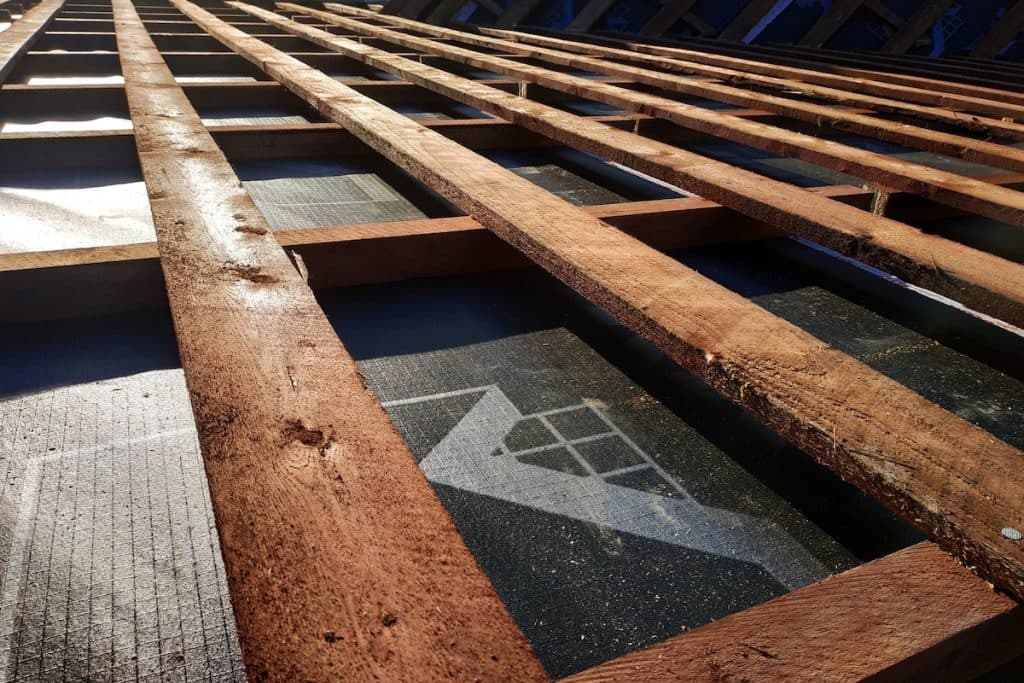
How Do Climate and Roof Slope Affect Your Choice?
The best underlayment depends heavily on your roof’s slope and your local climate. Matching the product to these conditions is key to long-term performance.
Which Underlayment Fits Your Roof and Climate?
The right underlayment depends on whether your roof is steep or low-slope and whether you face heat, cold, or heavy moisture. Steep-slope metal roofs benefit from high-friction synthetics that improve installer safety and shed water quickly, while low-slope roofs need peel-and-stick membranes that create a watertight bond against pooling. Cold, snowy regions call for ice and water shields that handle freeze-thaw cycles, and hot or humid climates demand UV-resistant, high-temperature synthetics. Matching the product to your specific conditions is what delivers lasting protection for homes in Chadds Ford and surrounding areas. Consider these factors:
- Steep-slope roofs: High-friction synthetics aid safety and water shedding.
- Low-slope roofs: Peel-and-stick membranes defend against pooling water.
- Cold climates: Ice and water shields handle freeze-thaw cycles.
- Hot or humid climates: UV-resistant, high-temp synthetics perform best.
What Are the Benefits of Upgrading Your Underlayment?
Investing in a higher-quality underlayment pays off in performance, safety, and warranty protection. The advantages extend well beyond basic waterproofing.
Why Is a Premium Underlayment Worth It?
A premium underlayment is worth the investment because it improves energy efficiency, installation safety, and warranty coverage. Many modern underlayments include radiant or reflective layers that reduce heat transfer into the attic, lowering energy bills, and anti-slip surfaces make installation safer on steep or slick metal panels. Roofing manufacturers often require premium underlayment to qualify for extended warranties, so the upgrade protects your investment on multiple fronts. For a long-lasting metal roof, the modest added cost of a better underlayment is money well spent.
- Energy efficiency: Radiant and reflective layers cut heat transfer and bills.
- Safer installation: Anti-slip surfaces protect crews on steep roofs.
- Warranty eligibility: Premium products often unlock extended warranties.
- Long-term value: A better underlayment protects the whole roof investment.
Frequently Asked Questions
What Is the Best Underlayment for a Metal Roof?
For most metal roofs, a high-temperature-rated synthetic underlayment is the best all-around choice, offering durability, heat tolerance, and value. Peel-and-stick high-temp membranes are ideal for low slopes, cold climates, and vulnerable areas like eaves and valleys. The right pick depends on your slope, climate, and budget.
Does a Metal Roof Need Special Underlayment?
Yes, metal roofs need underlayment rated for high temperatures, typically at least 240 degrees Fahrenheit, because metal generates intense heat that can degrade standard products. Using an underlayment not rated for metal can lead to premature failure and may void warranties. Always confirm the product is designed for metal applications.
Can You Use Felt Underlayment Under a Metal Roof?
Felt can be used under a metal roof, and heavier 30-pound felt is sometimes chosen for budget reasons, but it is less durable and less heat-tolerant than synthetic. It tears more easily and breaks down faster over time. Most professionals recommend high-temperature synthetic for better long-term performance.
How Long Does Metal Roof Underlayment Last?
Quality synthetic underlayment can last as long as the metal roof itself when properly installed, often several decades. Felt underlayment typically has a shorter lifespan. Choosing a durable, high-temperature product helps ensure the underlayment matches the long life of a metal roof.
Do You Need Underlayment on a Metal Roof?
Yes, underlayment is essential on a metal roof to protect the deck from moisture, reduce noise, improve energy efficiency, and provide a secondary weather barrier. Skipping it risks leaks, condensation, and a shorter roof life. Professional installations always include an appropriate underlayment.
Is Synthetic or Peel-and-Stick Better for Metal Roofs?
Both have their place: synthetic is the best value for the main roof field, while high-temperature peel-and-stick excels on low slopes and in vulnerable, leak-prone areas. Many installations combine the two, using peel-and-stick at eaves and valleys and synthetic elsewhere. A professional can recommend the right combination for your roof.
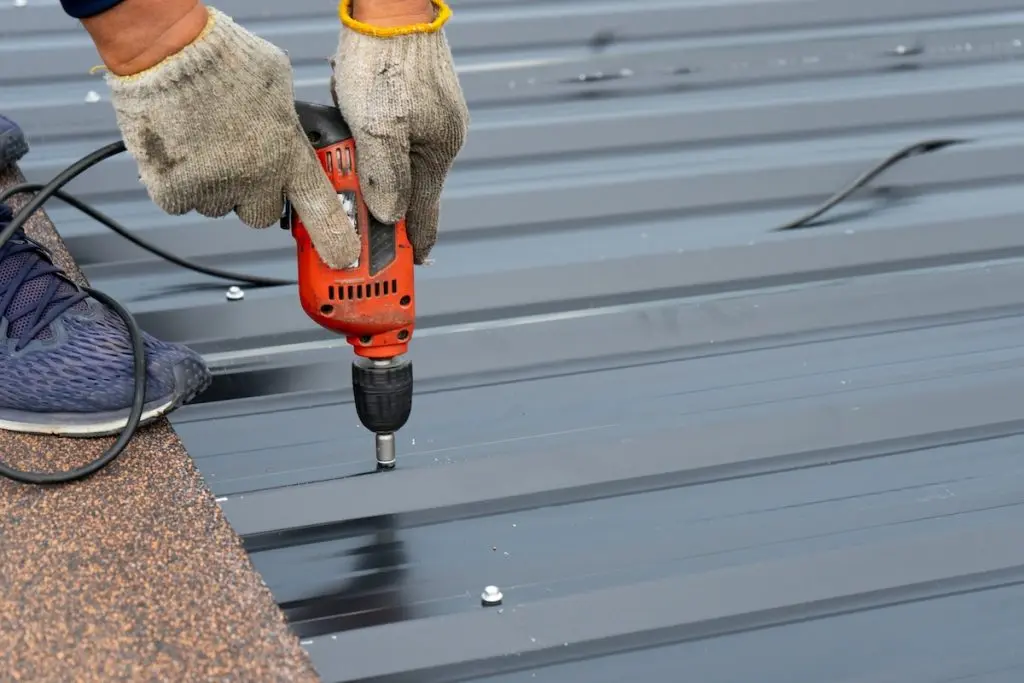
Why Choose O’Donnell Roofing Co. for Your Metal Roof
At O’Donnell Roofing Co., we know a great metal roof starts with the right foundation, which means selecting the correct high-temperature underlayment and installing it with precision. With over 100 years of experience serving homeowners in Chadds Ford and surrounding areas, we partner with top underlayment and roofing brands, employ certified and experienced crews, and provide honest, tailored recommendations based on your home’s needs. Your roof is one of your biggest investments, and we treat every one as if it were protecting our own family, from the first consultation to the final inspection. Ready to upgrade your roof with the right protection beneath the surface? Contact O’Donnell Roofing Co. today and see how we can help protect your home for generations to come.