Learning how to install gutters can help homeowners understand what goes into protecting their home from water damage. While it’s possible to complete a gutter installation as a DIY project, it requires careful measurement, proper tools, and attention to detail. Mistakes during installation can lead to leaks, clogs, and costly repairs later. Knowing the process also helps you evaluate whether it’s worth hiring professionals instead.
In this guide, we’ll cover:
- The 8 essential steps of gutter installation: A clear overview of the process.
- Tools and materials needed: What’s required for a successful installation.
- DIY vs. professional installation: Which option is right for you.
If you live in Devon or surrounding areas, this guide will help you decide whether to tackle your own gutter installation or trust the pros for long-term peace of mind.
Understanding the Role of Gutters
Gutters protect your home by directing rainwater away from the foundation, siding, and landscaping. Without proper drainage, even light rainfall can cause erosion, basement leaks, and costly structural issues over time.
Why Proper Installation Matters
- Prevents leaks: Correctly aligned gutters reduce overflow and pooling.
- Protects foundation: Directs water safely away from your home’s base.
- Extends roof life: Prevents standing water near eaves and shingles.
- Reduces maintenance: Proper slope and downspout placement minimize clogging.
Tools and Materials Needed for Installation
Before beginning a DIY project, gather all necessary tools and materials. Having the right setup ensures safety and efficiency.
- Materials: Aluminum or vinyl gutters, end caps, downspouts, elbows, hangers, and sealant.
- Tools: Ladder, tape measure, drill, hacksaw or tin snips, level, caulk gun, and safety gloves.
- Fasteners: Screws or rivets for brackets and joints.
- Sealant: Waterproof silicone to seal seams and joints.
Once you’ve gathered everything, it’s time to start the installation process.
8 Steps: How To Install Gutters
Installing gutters requires patience and precision. Here’s a breakdown of the process most professionals follow when installing new systems.
- Measure Roofline and Plan Layout: Determine where gutters and downspouts will be placed. Measure each section carefully and mark downspout locations to ensure proper water flow.
- Calculate Slope for Drainage: Gutters need a slight slope — typically about ¼ inch per 10 feet — to allow water to flow toward the downspouts. Mark the slope line with a chalk guideline.
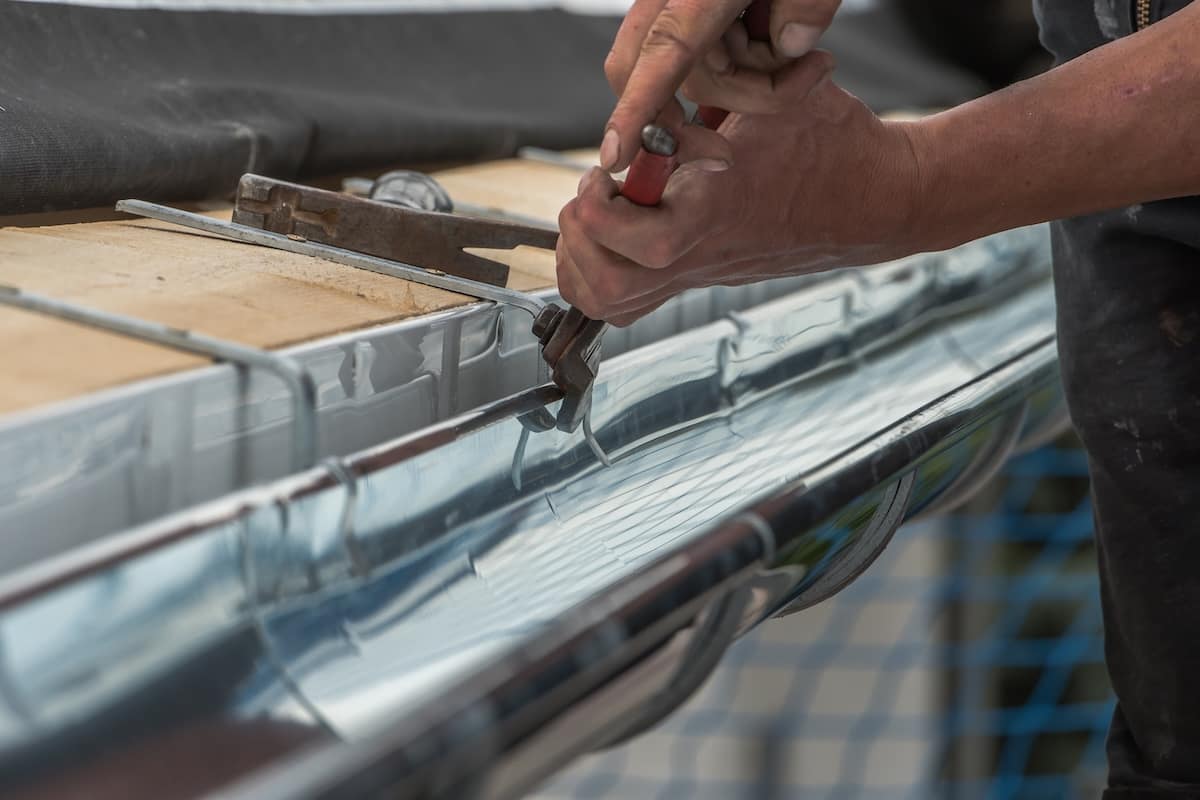
- Cut and Prepare Gutter Sections: Use tin snips or a hacksaw to cut gutter sections to fit your measurements. For seamless systems, sections are fabricated on-site using a gutter machine.
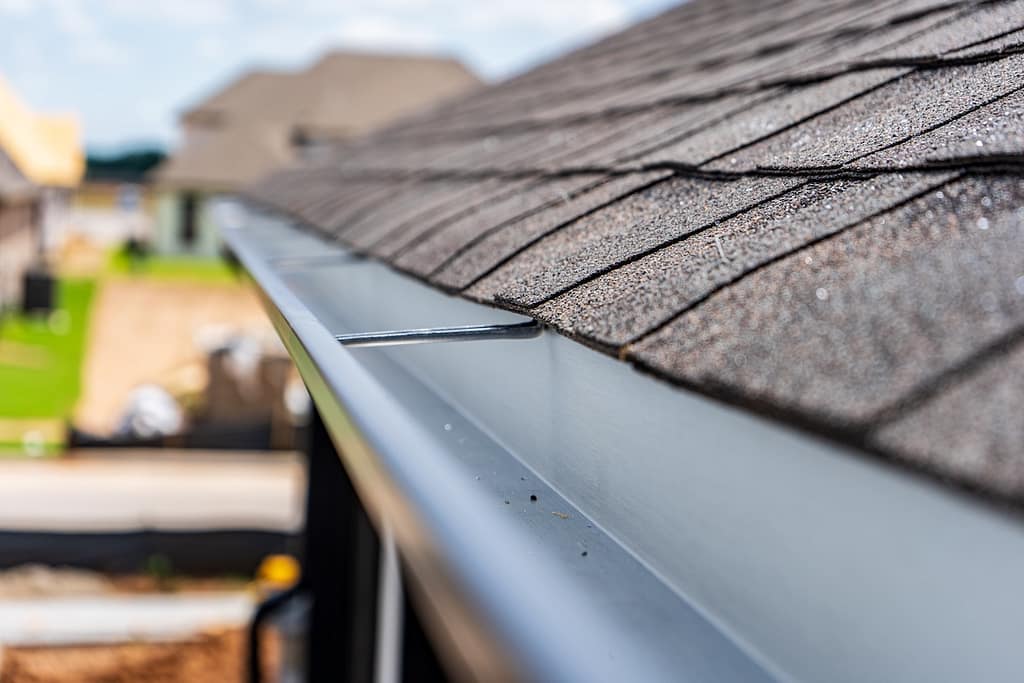
- Attach Hangers and Brackets: Secure hangers or brackets to the fascia board, spacing them every 2 to 3 feet. Proper spacing prevents sagging under heavy rainfall.
- Install Gutter Sections: Align gutter sections with the slope line and attach them securely to the hangers. Use sealant or rivets at joints and corners to create a watertight connection.
- Add End Caps and Downspout Outlets: Seal both ends of the gutters with end caps and cut holes for downspout outlets where needed. Apply sealant around all connections.
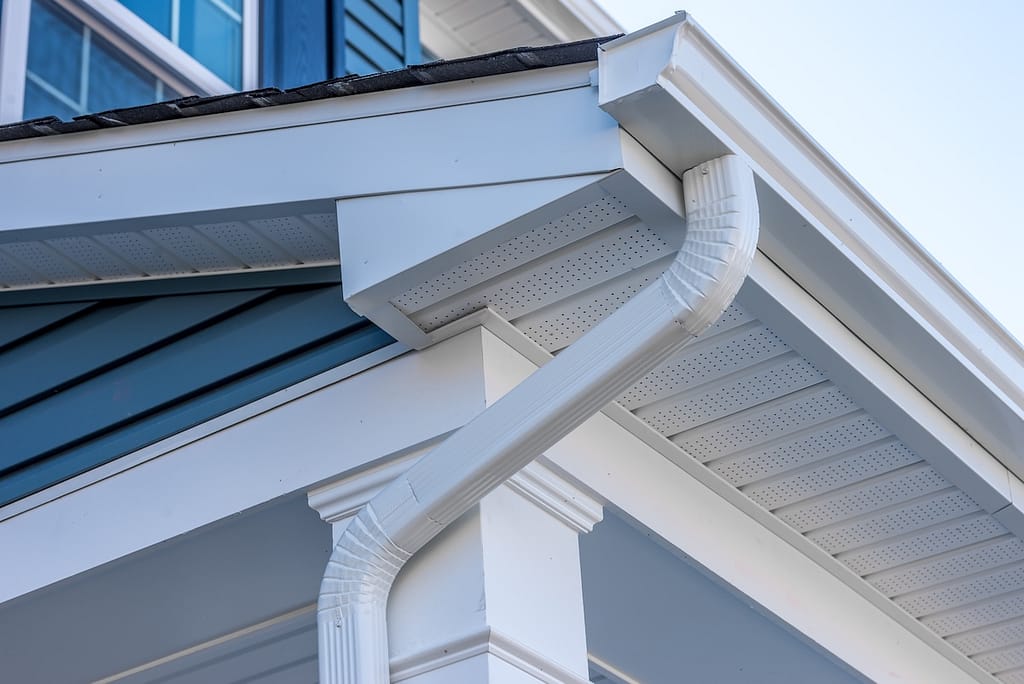
- Attach Downspouts and Elbows: Secure downspouts to the outlets using elbows and straps. Position the bottom elbows to direct water away from the foundation or into drainage systems.
- Test for Leaks and Adjust as Needed: Run water through the gutters using a hose to confirm proper flow and slope. Seal any leaks and adjust brackets if water isn’t draining correctly.
By following these steps carefully, homeowners can install basic gutter systems successfully — though precision and safety should always be top priorities.
Common DIY Mistakes to Avoid
Even experienced DIYers can make errors that affect gutter performance.
- Incorrect slope: Without proper angle, water can pool or overflow.
- Loose hangers: Weak fastening allows gutters to sag or detach over time.
- Improper sealing: Gaps or thin sealant lines lead to leaks at seams.
- Insufficient downspouts: Too few downspouts cause overflow during heavy rain.
- Unsafe ladder use: Always follow safety guidelines and use a stable ladder base.
Benefits of Hiring Professional Gutter Installers
While DIY projects can save money initially, hiring professionals often provides better long-term value and fewer complications.
Professional Installation Advantages
- Custom fabrication: Pros create seamless gutters on-site for a perfect fit.
- Proper pitch and alignment: Ensures optimal water flow and prevents overflow.
- Quality materials: Contractors use heavy-gauge aluminum or copper for lasting strength.
- Warranty protection: Many companies offer guarantees on both workmanship and materials.
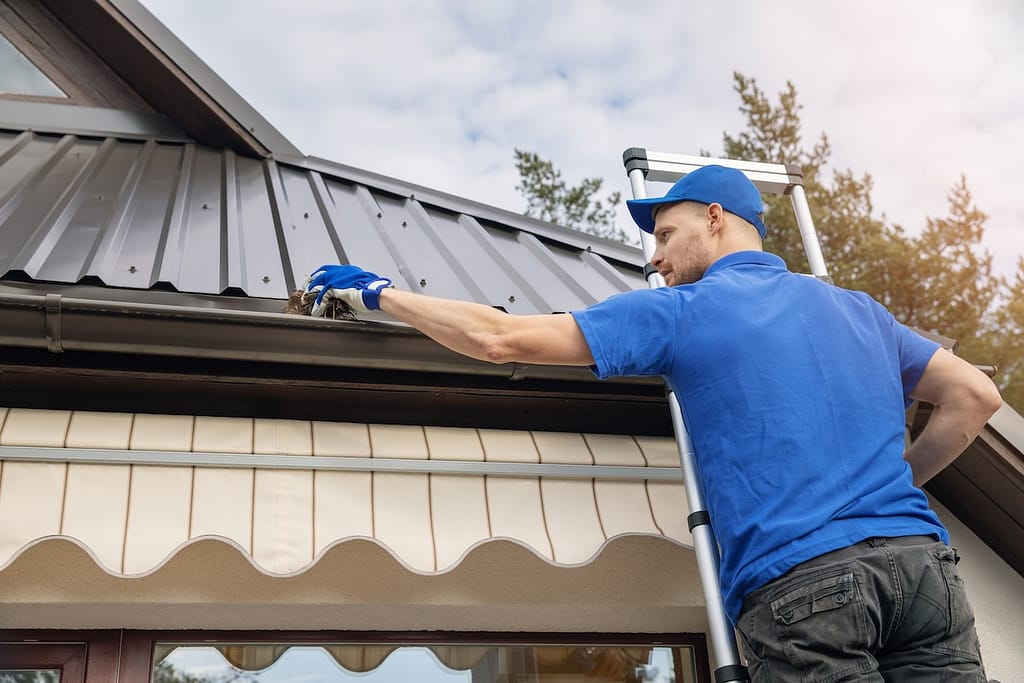
- Safety: Professional installers have the right equipment and training to work at heights safely.
Long-Term Savings
Professional installation reduces the risk of water damage, foundation cracks, or costly gutter repairs. Over time, this can easily outweigh the savings of a DIY job done incorrectly.
Comparing DIY vs. Professional Installation
| Installation Type | Cost Range (per linear foot) | Time Required | Skill Level | Long-Term Reliability |
| DIY Installation | $4–$8 | 1–2 days | Moderate to advanced | Varies by accuracy |
| Professional Installation | $12–$14 | 1 day | Expert | Consistent and warrantied |
While DIY may appeal to homeowners comfortable with tools, professional installation ensures a lasting, low-maintenance gutter system that performs properly from day one.
Maintenance Tips for Gutters
Regardless of who installs your gutters, proper maintenance is key to long-term performance.
- Clean twice a year: Remove leaves and debris in spring and fall.
- Inspect seams and fasteners: Tighten or reseal as necessary.
- Check slope annually: Ensure gutters still drain properly after seasonal changes.
- Add gutter guards: Reduce clogs and extend the time between cleanings.
With consistent upkeep, aluminum or copper gutters can last 20–30 years or more.
Gutter Guards: An Easy Upgrade for Long-Term Protection
Gutter guards are a valuable addition to any gutter system, helping prevent clogs and reducing the need for frequent cleanings. They act as a barrier that keeps out debris while allowing water to flow freely through your gutters, ensuring consistent drainage even during heavy rain.
How Gutter Guards Work
Gutter guards fit over or inside your existing gutter system to block leaves, twigs, and other debris. Depending on the design, they can be made from mesh, perforated metal, foam, or brush inserts. By preventing buildup, these guards help your gutters perform efficiently with minimal maintenance.
- Mesh guards: Fine screens that stop small debris while allowing steady water flow.
- Reverse curve guards: Use surface tension to guide water in while deflecting leaves.
- Foam inserts: Fit directly inside gutters to block large debris but still let water pass through.
- Brush-style guards: Bristled inserts that catch leaves but let water filter between bristles.
Benefits of Gutter Guards
- Reduced maintenance: Minimize the need for seasonal gutter cleaning.
- Clog prevention: Keep downspouts clear for better water flow.
- Extended gutter lifespan: Less standing water means reduced rust and corrosion.
- Improved performance: Prevent overflows and foundation damage during storms.
- Pest control: Discourages birds, squirrels, and insects from nesting in gutters.
Choose the Option That Fits Your Needs
Learning how to install gutters gives homeowners insight into the effort and precision required for a watertight, effective system. While DIY installation can work for simple projects, hiring professionals ensures your gutters function properly for decades without costly issues.
If you’re in Devon, contact O’Donnell Roofing Co. today for a free seamless gutter installation estimate. Our experts deliver precision, reliability, and peace of mind — so your home stays protected year-round.