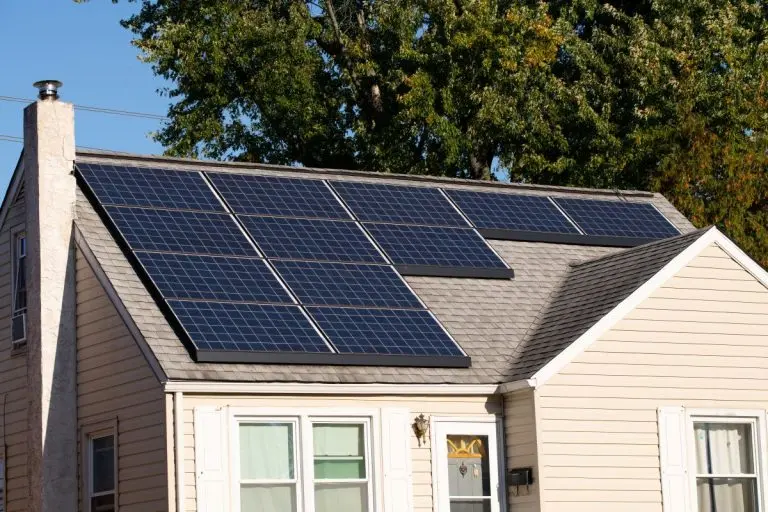


A hail damage roof inspection is one of the most important steps you can take after a storm to protect your home and make sure your insurance claim is accurate. Hail may seem like a brief event, but its effects can linger for years if they are not caught early, and damage that looks minor from the ground can quietly weaken your entire roof system. Knowing exactly what to look for helps you act fast, avoid costly repairs, and keep your roof in top condition. Here is what this guide covers:
- The 8 warning signs: The hail damage indicators on shingles, flashing, gutters, and inside your home that you should never ignore.
- What professionals check: What trained roofers look for that homeowners often miss during a hail damage roof inspection.
- Your next steps: How to file an insurance claim and protect your roof against future storms.
Whether you live in Malvern and surrounding areas or anywhere storms strike often, this guide will help you make informed decisions about your roof’s condition and what to do next.
Understanding Hail Damage and Its Impact
Hail can cause both visible and hidden roof damage, and the size, density, and speed of hailstones all influence how much harm they do. Even a roof that looks fine from the ground may have underlying issues that weaken the system over time.
How Does Hail Affect Different Roofing Materials?
Hail affects each roofing material differently, which is why knowing what to look for depends on the type of roof you have. Asphalt shingles tend to show dark, circular marks where granules have been knocked away, while wood shakes split or crack along the grain, and metal roofing dents in ways that can compromise its protective coating. Slate and tile roofs are more brittle and can chip, crack, or break outright, creating immediate paths for water. Understanding how your specific roof responds to hail makes it far easier to spot trouble during an inspection.
- Asphalt shingles: Dark circular marks appear where granules were knocked loose, exposing the underlayer.
- Wood shakes: Hail splits or cracks the wood, leaving an uneven surface that absorbs moisture.
- Metal roofing: Dents and scratches can compromise the protective coating and lead to rust.
- Slate or tile: These brittle materials can chip, crack, or break entirely, causing leaks.
Why Do Timely Inspections Matter?
Timely inspections matter because a hail-damaged roof may not leak right away, yet small cracks and weakened shingles can grow into major problems months later. Insurance policies also typically require claims to be filed within a set window, so waiting too long can cost you coverage entirely. Beyond the deadline, early inspection catches water intrusion before it causes rot or mold and confirms that the decking and support structure remain sound. Acting quickly is the difference between a minor repair and a major one.
- Insurance eligibility: Delayed reporting can lead your insurer to deny the claim.
- Water infiltration: Even minor impacts can let water seep under shingles, causing rot or mold.
- Structural protection: Early inspection confirms decking and support beams are intact.
- Cost control: Catching damage early keeps a small repair from becoming a large one.
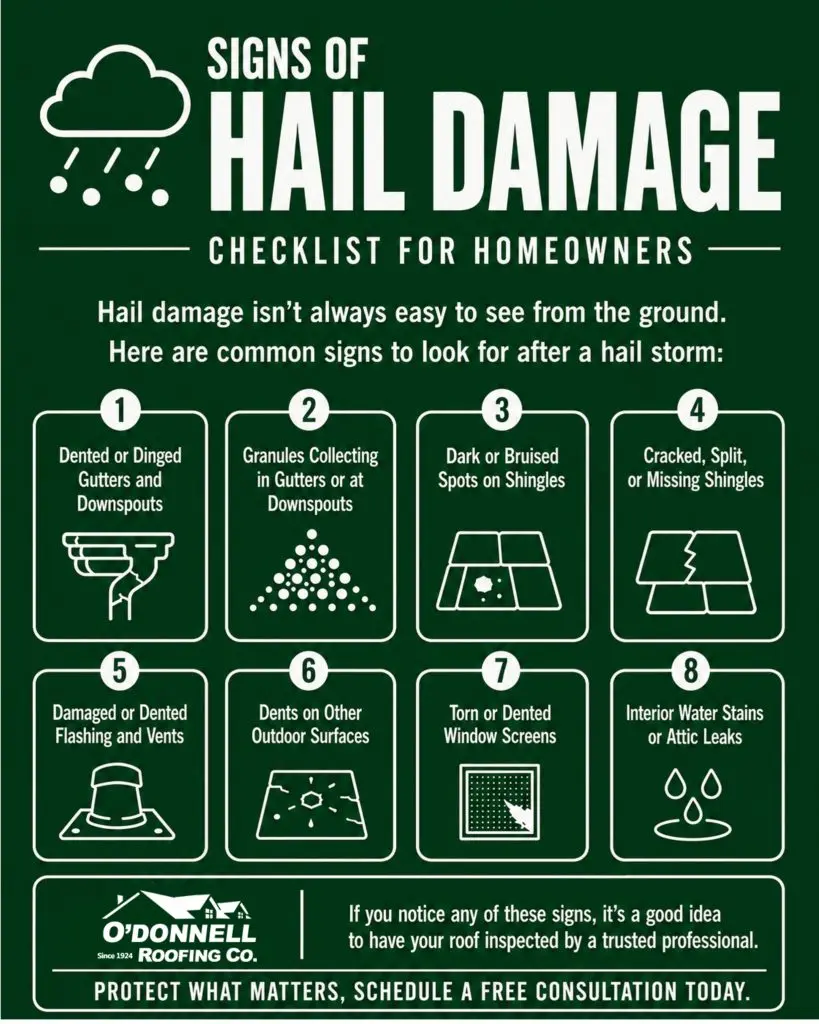
8 Signs of Hail Damage You Should Not Ignore
Hail leaves behind a range of clues, some obvious and some easy to miss. The eight signs below are the ones that most often point to roof damage, and spotting any of them is reason to schedule a professional inspection.
1. Dented or Dinged Gutters and Downspouts
Dented gutters and downspouts are often the first visible sign of hail damage because aluminum shows impacts clearly. When hail is large enough to dent metal gutters, it is almost certainly large enough to damage your roof as well, making the gutters a useful early warning system. Walk the perimeter of your home and look closely at the gutters, downspouts, and any metal fascia for dings and divots. Because you can check them safely from the ground, gutters are one of the easiest places to start your assessment in Malvern and surrounding areas.
- Visible divots: Hail leaves clear dents and dings in aluminum gutters.
- Severity clue: Damaged gutters suggest the roof took similar impacts.
- Ground-level check: Gutters can be inspected safely without a ladder.
- Downspout damage: Check downspouts and metal fascia for impact marks too.
2. Granules Collecting in Gutters or at Downspouts
Granule buildup in gutters or near downspouts is a telltale sign that hail has stripped the protective surface from your shingles. Asphalt shingles are coated in granules that shield the asphalt layer from UV rays, and hail impacts knock these granules loose, leaving the shingle vulnerable. Finding piles of granules that look like coarse black sand is a strong indicator of roof damage even when the shingles themselves are hard to see. This loss accelerates shingle aging, so it should never be dismissed as normal wear.
- Sand-like buildup: Loose granules resemble coarse black sand in gutters.
- Lost protection: Stripped granules expose shingles to UV damage.
- Hidden indicator: Granule loss signals damage even when shingles look intact.
- Accelerated aging: Granule loss shortens the remaining life of the roof.
3. Dark or Bruised Spots on Shingles
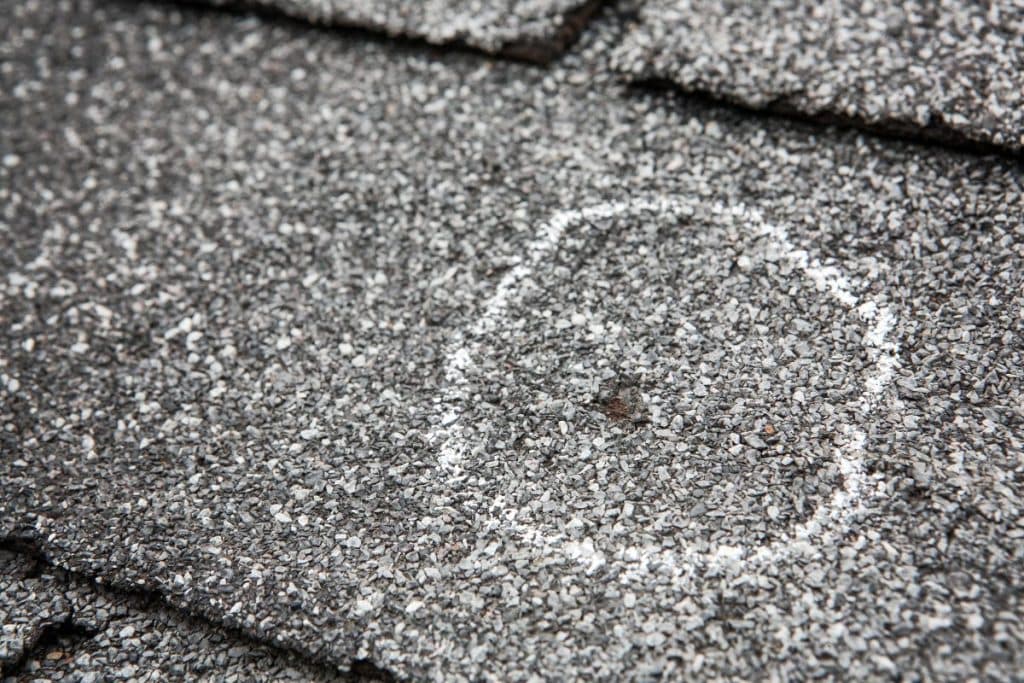
Dark or bruised spots on shingles indicate where hail has struck hard enough to knock away granules and damage the layer beneath. These marks often appear as circular or irregular dark patches where the underlying asphalt is exposed. A bruise may also feel soft or spongy to the touch, similar to a bruise on fruit, signaling that the shingle’s integrity is compromised even if it has not yet cracked. These spots are among the clearest signs of hail impact and a key focus of any professional inspection.
- Circular marks: Dark patches show where granules were knocked away.
- Soft to the touch: Bruised shingles feel spongy, signaling hidden damage.
- Exposed asphalt: The underlayer becomes visible where hail struck.
- Inspection focus: Bruising is a primary sign roofers look for.
4. Cracked, Split, or Missing Shingles
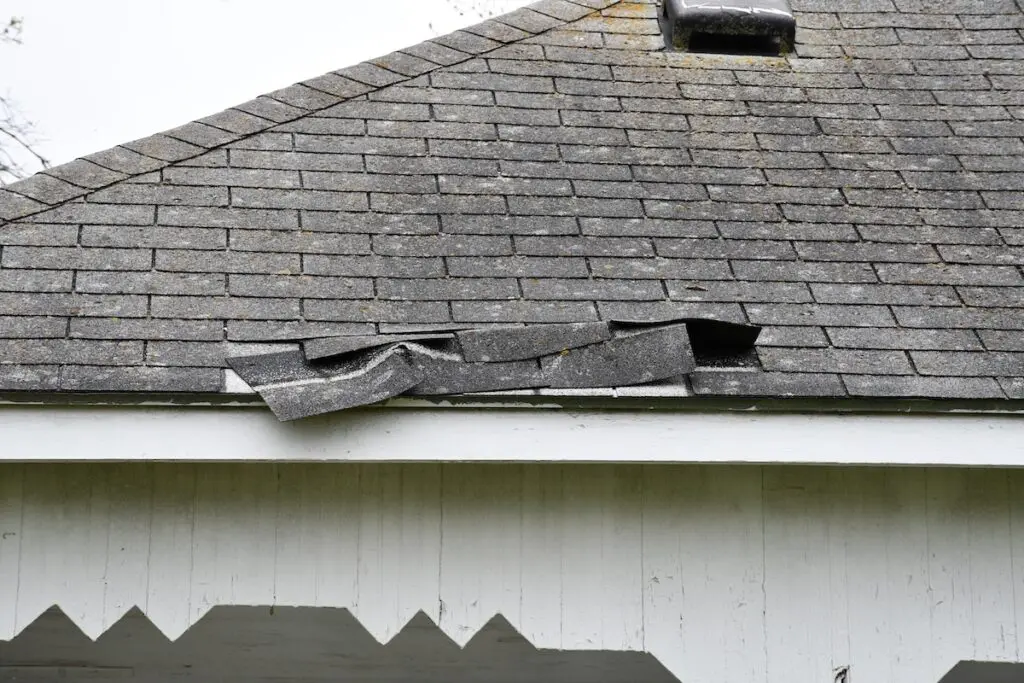
Cracked, split, or missing shingles are obvious signs that hail, often combined with high wind, has damaged your roof. Large hailstones can crack shingles outright, while the wind that accompanies a hailstorm can lift or tear shingles away entirely. Any gap in the shingle layer exposes the underlayment and decking directly to water, making these among the most urgent signs to address. Look for shingles that appear broken, displaced, or completely absent, particularly after a severe storm.
- Outright cracks: Large hailstones can split shingles completely.
- Wind damage: Accompanying wind can lift or tear shingles away.
- Exposed layers: Gaps leave underlayment and decking open to water.
- Urgent repair: Missing shingles need prompt professional attention.
5. Damaged or Dented Flashing and Vents
Damaged flashing and dented vents are common hail casualties that often lead to leaks if left unaddressed. The metal flashing around chimneys, skylights, and roof valleys is especially vulnerable, and even small dents or bent sections can break the watertight seal these components provide. Vent caps and pipe boots can also crack or deform under hail impact, creating openings for moisture. Because these areas are frequent leak sources, damage to them is a sign that warrants a closer professional look.
- Vulnerable metal: Flashing around chimneys and valleys dents easily.
- Broken seals: Even small dents can compromise watertight flashing.
- Cracked vents: Vent caps and pipe boots can deform under impact.
- Leak risk: Flashing and vent damage are leading causes of leaks.
6. Dents on Other Outdoor Surfaces
Dents on other outdoor surfaces, such as your air conditioning unit, fencing, or deck, are strong indirect evidence that your roof was hit hard. Hail damage to softer or more exposed surfaces around your property indicates the storm carried enough force to harm the roof as well. Bent fins on an AC condenser, chipped paint or splintered wood on fences and decks, and dented mailboxes all help establish the severity of the storm. These clues are especially useful for documenting the scope of damage for an insurance claim.
- AC unit damage: Bent condenser fins reveal significant hail force.
- Fence and deck marks: Chipped or splintered wood signals storm strength.
- Property-wide clues: Damage to surfaces indicates the roof was likely hit.
- Claim support: This evidence helps document the storm’s severity.
7. Torn or Dented Window Screens and Siding
Torn window screens and dented siding are visible signs of direct hail impact that often accompany roof damage. When hail is forceful enough to tear screens or leave marks and cracks on siding and trim, the roof above has almost certainly taken comparable hits. Inspect window screens for tears and punctures, and check siding for cracked paint, dents, or chips. These signs are easy to spot from the ground and help confirm that a full hail damage roof inspection is warranted.
- Torn screens: Punctured or dented screens show direct hail impact.
- Siding marks: Cracked paint and dents on siding accompany roof damage.
- Ground-level visibility: These signs are easy to check safely.
- Confirmation: Siding and screen damage support the need for inspection.
8. Interior Water Stains or Attic Leaks
Interior water stains and attic leaks are warning signs that hail damage has already allowed water into your home. Yellow or brown stains on ceilings and walls suggest that water has penetrated the roof, while a persistent musty or damp smell in the attic points to hidden moisture and possible mold. Visible daylight coming through the roof boards in your attic confirms there are openings in the roofing system. Because these signs mean water is already getting in, they call for immediate professional attention.
- Ceiling stains: Yellow or brown spots indicate roof water penetration.
- Musty odors: Damp smells in the attic suggest hidden leaks and mold.
- Daylight gaps: Light through roof boards means open gaps exist.
- Immediate action: Interior signs mean water is already entering the home.
When you consider how common hail has become, the case for prompt inspection grows even stronger. According to the Insurance Information Institute, citing NOAA’s National Weather Service Storm Prediction Center, the United States recorded 5,432 major hail events in 2025, up from 5,373 in 2024, with Texas and Kansas reporting the most. With damaging hail this widespread, a timely inspection after any significant storm is simply smart protection.
What Do Professional Inspectors Look For?
A professional hail damage roof inspection is detailed and methodical, designed to ensure no area is overlooked. Understanding what inspectors evaluate helps you feel confident in the assessment and the documentation it produces.
How Do Roofers Assess the Roof Surface?
Roofers assess the roof surface by examining it for both cosmetic and structural damage, looking well beyond what a homeowner would notice. They study impact patterns to determine whether the hail was wind-driven, measure granule loss to gauge how much shingle life has been lost, and check for shingles that have shifted or loosened from their adhesive seals. This careful surface analysis reveals the true extent of the damage and informs which repairs are needed. The goal is an accurate picture of the roof’s condition, not just its appearance.
- Impact patterns: Repeated damage in certain areas can indicate wind-driven hail.
- Granule measurement: Excessive granule loss shortens shingle life expectancy.
- Shingle displacement: Loose or shifted shingles reveal compromised seals.
- Full assessment: Surface analysis captures both cosmetic and structural issues.
What About Flashing and Structural Components?
Flashing, vents, skylights, and chimneys receive close attention during an inspection because they are particularly vulnerable to hail and prone to leaking. Inspectors look for dents or bending in flashing and drip edges, confirm that caulking and sealants remain watertight, and check vent caps for cracks or openings that could admit moisture. These transition points are where many leaks begin, so their condition is central to a thorough evaluation. A professional documents any issues found here as part of the formal report.
- Metal deformation: Inspectors check flashing and drip edges for dents or bends.
- Sealant condition: Caulking and sealants are verified as watertight.
- Vent integrity: Cracked vent caps and openings are flagged.
- Documented findings: Issues are recorded for the inspection report.
How Is Damage Documented for Insurance?
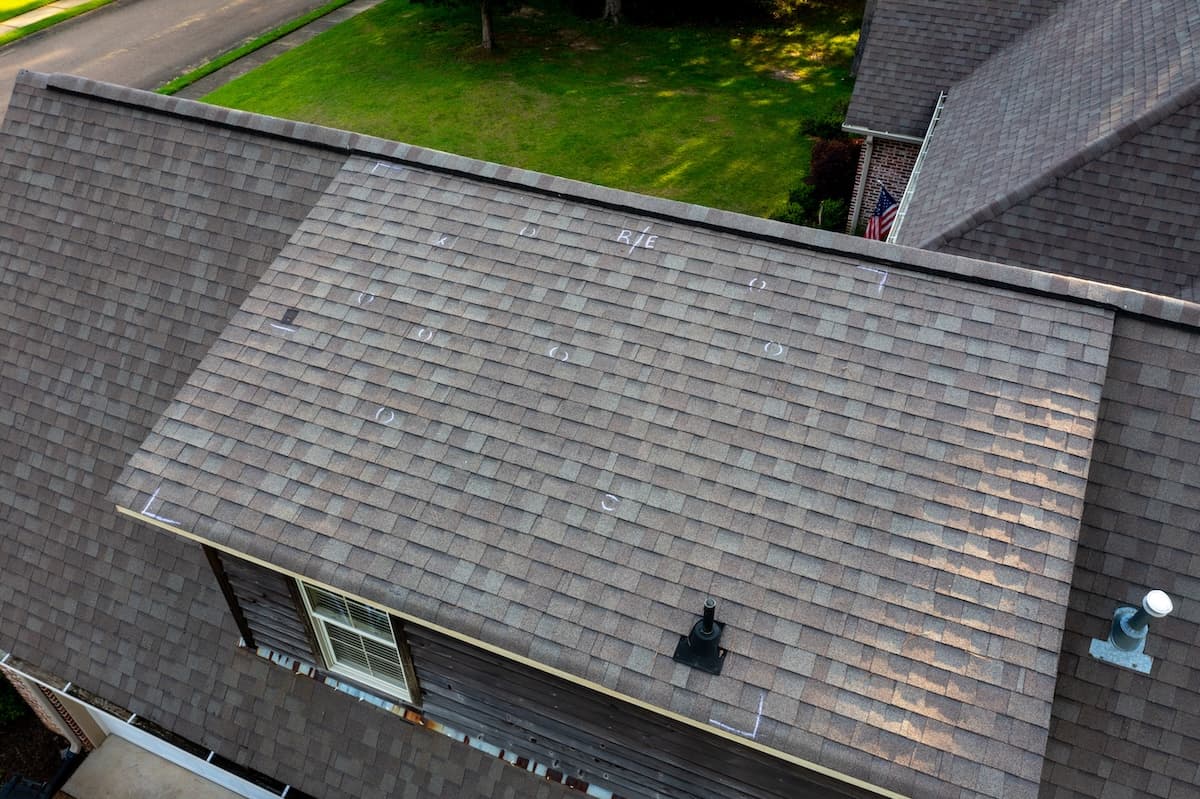
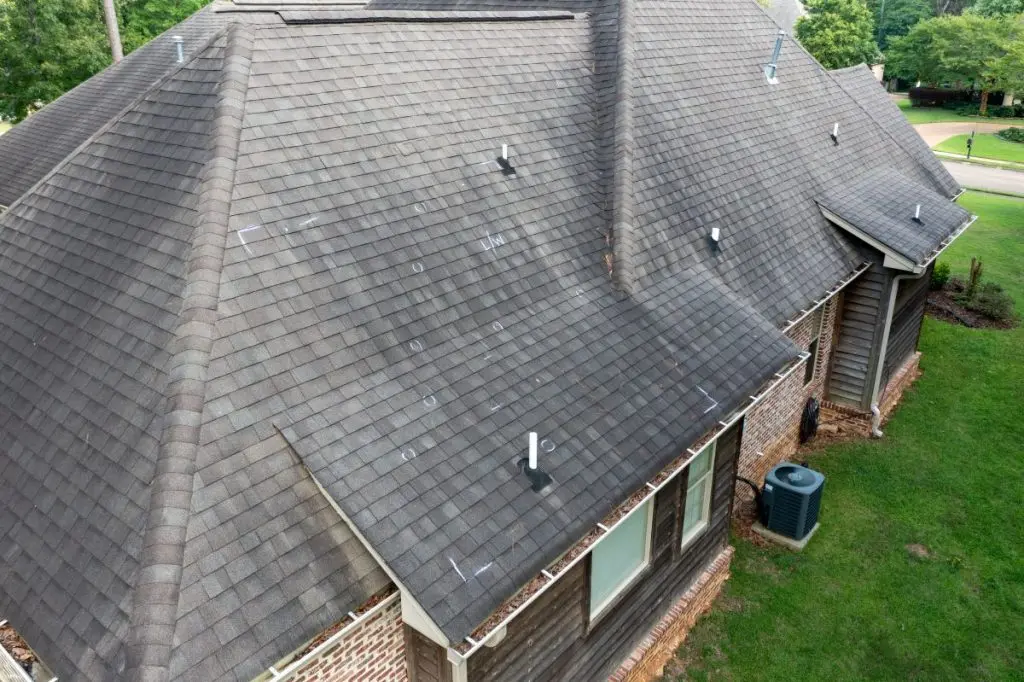
Damage is documented through a formal report that combines photo evidence, damage mapping, and a repair estimate to support your insurance claim. Professional roofers photograph specific damaged sections, create a diagram showing where hail impacts were found, and provide a transparent quote for the necessary repair or replacement work. This documentation is what turns a visual inspection into usable evidence for your insurer. Thorough records strengthen your claim and help ensure you receive fair coverage.
- Photo evidence: Images capture each damaged section of the roof.
- Damage mapping: A diagram shows where impacts were located.
- Repair estimate: A transparent quote outlines the needed work.
- Claim support: Complete documentation strengthens your insurance filing.
How Do You File a Hail Damage Insurance Claim?
Filing a hail damage insurance claim goes more smoothly when you act quickly and document everything thoroughly. The steps below help you protect both your roof and your claim after a storm.
What Steps Should You Take After a Hailstorm?
After a hailstorm, the most important steps are documenting the damage, reviewing your policy, and bringing in a professional before you file. Start by taking clear photos of your property and any visible damage, then check your insurance policy for coverage details and the deadline for reporting hail damage. Next, schedule an inspection with a certified contractor whose report and photos will support your claim, and only then file with your insurer. Comparing repair estimates and scheduling repairs promptly rounds out the process and limits the chance of further damage.
- Document first: Take clear photos of your roofline and any visible damage.
- Review coverage: Check your policy details and the reporting time limit.
- Get a professional inspection: A certified contractor’s report supports your claim.
- File and repair: Submit documentation, compare estimates, and schedule repairs promptly.
How Can You Prevent Future Hail Damage?
While hail is unpredictable, certain upgrades and maintenance steps make your home more resilient against future storms. A few proactive measures can significantly reduce the damage the next storm causes.
Which Upgrades Protect Against Hail?
The upgrades that best protect against hail include impact-resistant roofing materials, annual inspections, and reinforced gutters and drainage. If you are due for a replacement, Class 4 impact-resistant shingles are tested to withstand larger hailstones with minimal damage, and many carry extended warranties and may qualify for insurance discounts. Scheduling a professional inspection once a year catches weak points before storms arrive, while heavy-duty gutters and gutter guards resist denting and keep water flowing properly. Together, these steps build real resilience for homes in Malvern and surrounding areas.
- Impact-resistant materials: Class 4 shingles withstand larger hailstones with minimal damage.
- Annual inspections: Yearly checkups catch weak points before storm season.
- Reinforced gutters: Heavy-duty gutters and guards resist denting and clogging.
- Warranty and savings: Impact-resistant products may extend warranties and lower premiums.
Frequently Asked Questions
How Soon After a Hailstorm Should I Get an Inspection?
You should schedule a hail damage roof inspection as soon as possible after a storm, ideally within days. Prompt inspection catches damage early and helps you meet your insurer’s reporting deadline, since waiting too long can jeopardize your claim. Even if you see no obvious damage, a professional check is worthwhile after any significant hailstorm.
Can I Inspect My Roof for Hail Damage Myself?
You can safely perform a ground-level assessment by checking gutters, siding, and outdoor surfaces, but you should never climb onto the roof unless you are trained and equipped. Many signs of hail damage are subtle and best identified by a professional. A trained roofer can spot issues you would likely miss and document them properly for insurance.
Does Homeowners Insurance Cover Hail Damage?
Most homeowners policies cover hail damage, though coverage details, deductibles, and reporting deadlines vary by policy. Some insurers apply separate wind and hail deductibles or settle older roofs at actual cash value rather than replacement cost. Review your policy and confirm the specifics with your insurer before filing.
How Much Does a Hail Damage Roof Inspection Cost?
Many roofing contractors, including O’Donnell Roofing Co., offer free hail damage roof inspections, especially after a storm. The inspection typically includes a detailed report with photos to support an insurance claim. Always confirm whether an inspection is free when you schedule it.
Will Hail Damage Always Cause a Leak Right Away?
No, hail damage does not always cause an immediate leak, which is part of what makes it dangerous. Weakened shingles and small cracks can take months to develop into active leaks, by which point the damage is more extensive. This delay is exactly why prompt inspection after a storm is so important.
Are Impact-Resistant Shingles Worth It?
For homeowners in hail-prone areas, impact-resistant Class 4 shingles are often worth the investment. They withstand larger hailstones with less damage, frequently come with extended warranties, and may qualify you for insurance discounts. A professional can help you decide whether they make sense for your home.
Why Homeowners in Malvern Trust O’Donnell Roofing Co.
When it comes to hail damage roof inspections, homeowners in Malvern and surrounding areas know they can rely on O’Donnell Roofing Co. Our team brings decades of experience, advanced tools, and a reputation for honesty and thoroughness, and we treat your home as if it were our own from the first inspection to the final repair. Whether you need a minor repair or a full replacement, our certified inspectors document hail damage accurately to support your insurance claim. As a family-owned and locally operated company since 1924, we have earned the trust of the community one roof at a time.
- Trusted expertise: Family-owned and locally operated since 1924.
- Certified inspectors: Trained to identify hail damage accurately for insurance documentation.
- Comprehensive service: From minor repairs to full roof replacements, we handle it all.

Protect Your Home With a Professional Inspection
A hail damage roof inspection is your first line of defense against unseen problems that could lead to expensive repairs later. By watching for these eight warning signs and acting quickly after a storm, you can protect your investment and keep your roof strong for years to come.
If your home in Malvern and surrounding areas has recently weathered a hailstorm, do not wait until leaks appear. Contact O’Donnell Roofing Co. today for a free hail damage roof inspection and estimate. Our experts will assess your roof, provide clear documentation, and restore your peace of mind.