If you’re evaluating roofing systems for a commercial building, you’ve likely come across two leading options: EPDM and TPO. Both are single-ply membranes commonly used for flat or low-slope roofs, but they’re not interchangeable. Each comes with distinct materials, benefits, and installation requirements.
So how do you choose between EPDM vs TPO?
This guide breaks it all down in plain terms, from cost and climate suitability to energy efficiency and maintenance. Whether you’re managing a large facility or planning a new build, understanding these differences will help you make a smart, long-term investment in your roof.
We’ll also share practical tips on working with a contractor who specializes in EPDM and TPO roofing systems to ensure your installation is done right.
Key Takeaways
- Material & Composition: EPDM is a flexible rubber membrane; TPO is a thermoplastic with heat-reflective properties and welded seams.
- Cost & Long-Term Value: EPDM typically has a lower upfront cost; TPO may offer better energy savings over time.
- Lifespan & Maintenance: EPDM can last 20–30 years with minimal upkeep; TPO averages 15–25 years and may need more frequent inspections.
- Climate Performance: EPDM handles cold, freeze-thaw cycles well; TPO performs better in hot, sunny, and UV-intense climates.
- Energy Efficiency: TPO’s white surface reflects heat, improving energy performance in warm climates; EPDM absorbs heat, which may benefit colder regions.
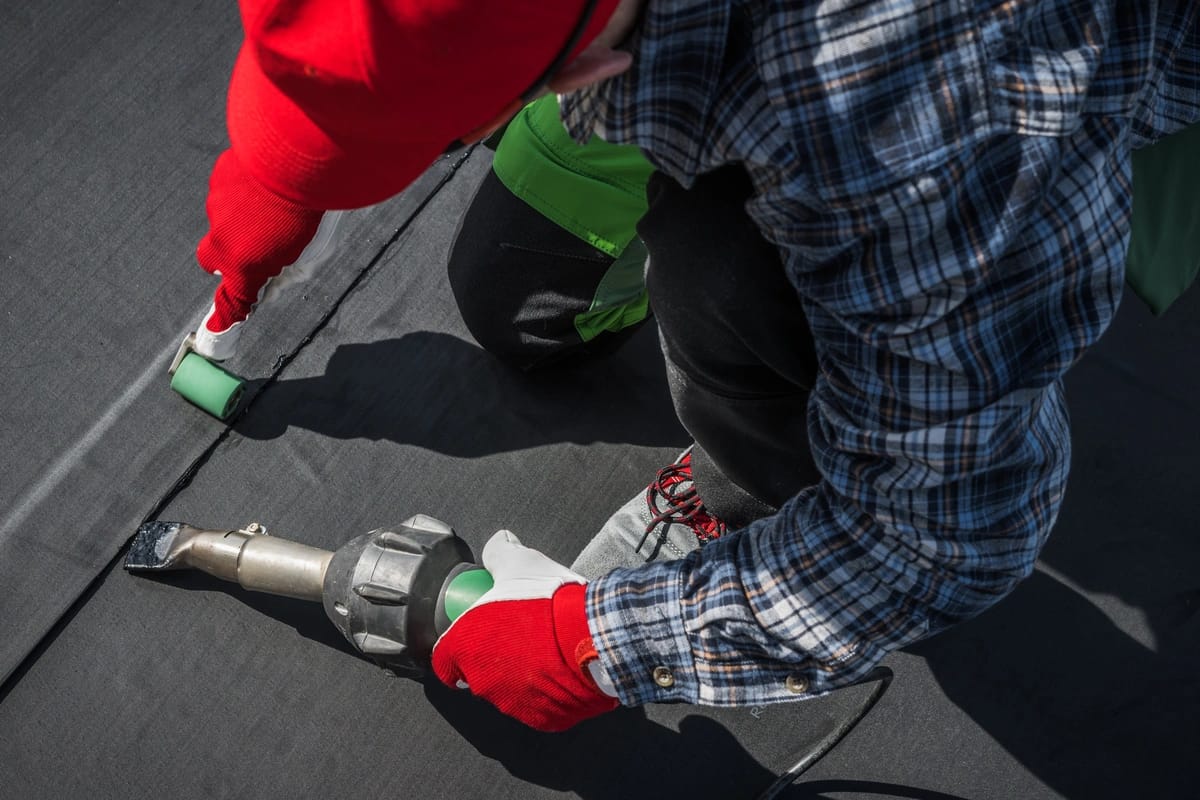
- Best Use & Installation: EPDM suits simple, low-cost installations; TPO is better for buildings needing energy efficiency and professional heat-welded seams.
- Contractor Considerations: Discuss material fit, warranty options, and installer experience with your commercial roofing contractor before making a decision.
What is EPDM Roofing?
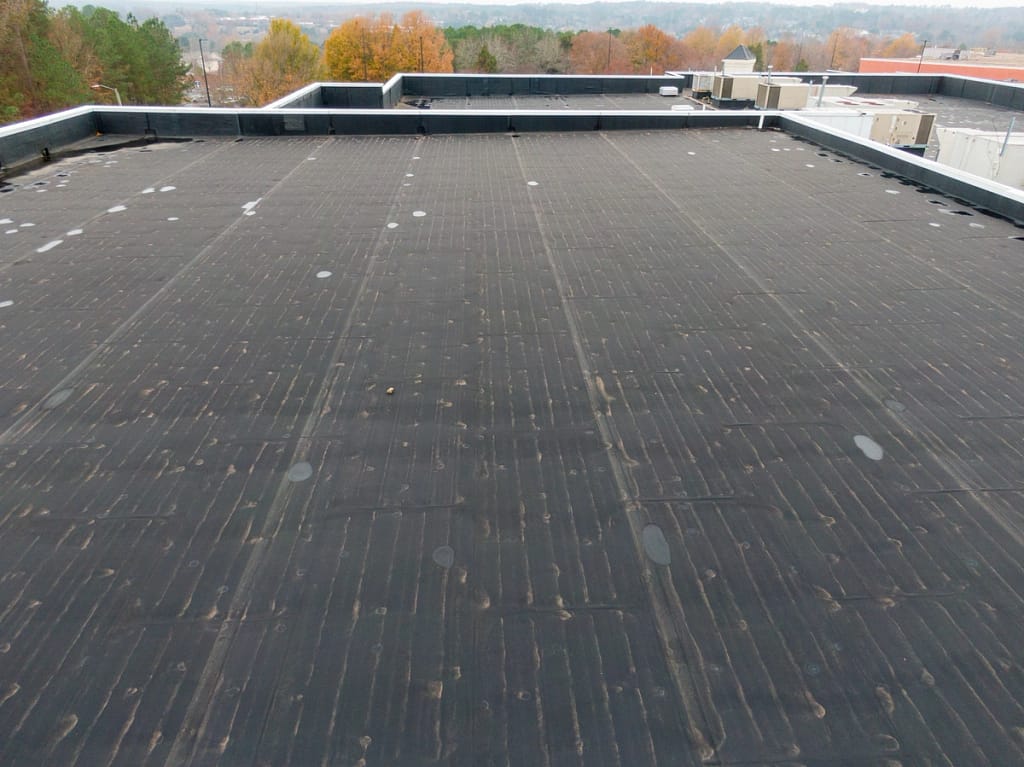
EPDM, short for Ethylene Propylene Diene Monomer, is a synthetic rubber material widely used in commercial roofing applications. It’s known for its exceptional durability, flexibility, and weather resistance. EPDM roofs are typically installed in large, seamless sheets, providing excellent protection against water infiltration.
EPDM Roofing: Pros and Cons
| Pros | Cons |
|---|---|
| Durability: Can withstand extreme weather like high winds, hail, and heavy rain. | Susceptible to Punctures: Vulnerable to sharp objects, debris, or heavy foot traffic. |
| Flexibility: Rubber composition allows movement without cracking or tearing. | Limited Color Options: Mostly available in black, offering minimal design flexibility. |
| Cost-Effective: Affordable compared to other commercial roofing systems. | Not Ideal for High Heat: Prolonged exposure to extreme heat can degrade the membrane. |
| Easy Repairs: Minor damage can be repaired quickly and at low cost, extending the roof’s life. | Requires Professional Installation: Proper adhesion and seam sealing must be done by experts. |
| Longevity: With routine maintenance, EPDM roofs can last 30+ years. |
What is TPO Roofing?
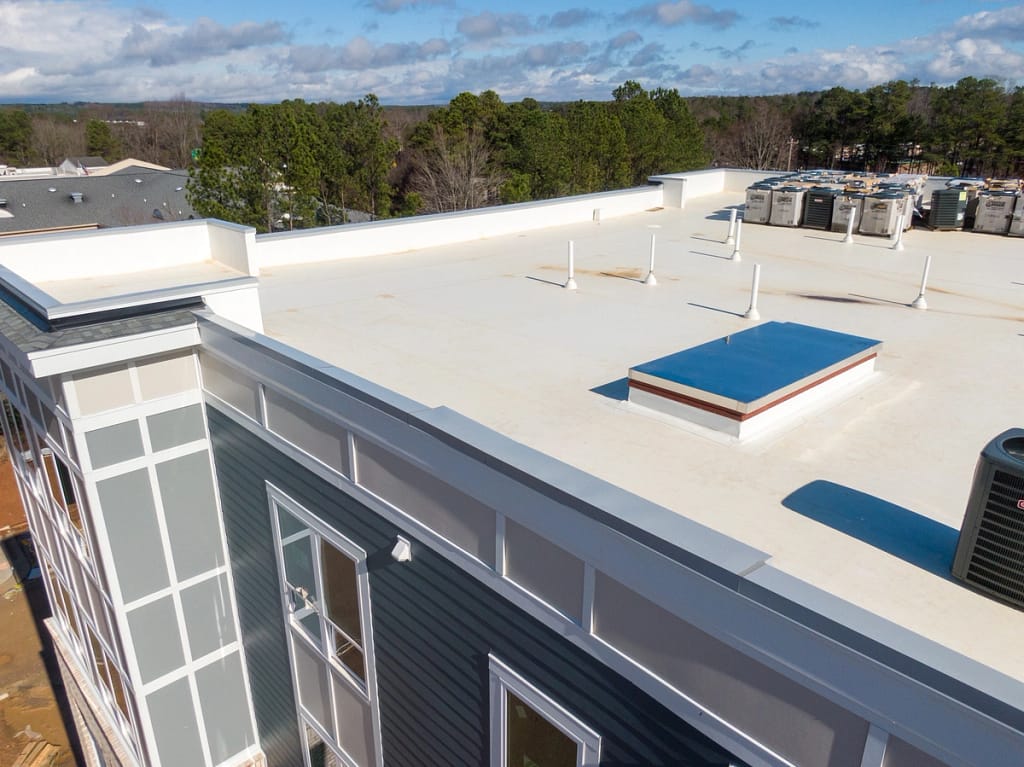
TPO, or Thermoplastic Polyolefin, is a single-ply roofing membrane composed of a blend of rubber and thermoplastics. TPO roofing is renowned for its energy efficiency, ease of installation, and resistance to UV rays. Like EPDM, TPO roofs are often installed in large sheets, minimizing seams and potential leakage points.
TPO Roofing: Pros and Cons
| Pros | Cons |
|---|---|
| Energy Efficient: Reflects sunlight to reduce heat absorption and lower cooling costs. | Prone to Shrinkage: May shrink over time, leading to seam separation and leaks if not properly installed. |
| Quick Installation: Lightweight material allows for faster, less disruptive installs. | Unproven Long-Term Longevity: Less established track record compared to EPDM for 30+ year durability. |
| Chemical Resistant: Performs well in environments exposed to grease, oils, or chemicals. | Tear-Prone: Susceptible to punctures or tears during installation or from mechanical impact. |
| Color Variety: Available in white, gray, tan, and other colors for more aesthetic flexibility. | UV Degradation Over Time: Despite UV resistance, prolonged sun exposure may lead to performance decline. |
| Eco-Friendly: Fully recyclable at end-of-life, supporting sustainable building practices. |
EPDM vs TPO Cost Considerations
EPDM roofing typically costs between $4 to $8 per square foot installed, making it one of the most cost-effective roofing options available. On the other hand, TPO roofing tends to be slightly more expensive, ranging from $5 to $10 per square foot installed. However, prices may vary depending on factors such as the size of the roof, location, and contractor rates.
EPDM vs TPO Longevity and Durability
Both EPDM and TPO roofing systems offer impressive longevity when properly maintained. EPDM roofs can last up to 30 years or more, while TPO roofs have a similar lifespan, though exact durability may vary depending on environmental factors and maintenance practices. In terms of durability, EPDM excels in withstanding punctures and hail damage, whereas TPO is prized for its resistance to UV rays and chemicals.
EPDM vs TPO: Which Is More Energy Efficient?
When evaluating the energy efficiency of roofing systems, TPO clearly leads in warm climates, thanks to its reflective surface and UV-resistant design. Most TPO membranes come in white or light colors, which naturally reflect sunlight and reduce heat absorption. This results in lower cooling costs and improved indoor comfort, a key advantage for buildings in hot, sunny regions.
By contrast, EPDM roofing is typically black, meaning it absorbs heat rather than reflects it. While this may sound like a drawback, it can actually be beneficial in colder climates, where retaining warmth during winter months can reduce heating demands.
Although EPDM lacks built-in reflectivity, its energy performance can still be improved with:
- Strategic placement in shaded or low-sun areas
- Proper insulation and ventilation
- Optional white or reflective coatings to reduce heat gain
| Roofing Type | Energy Efficiency | Best For |
|---|---|---|
| TPO | High (reflects heat) | Hot, sunny climates |
| EPDM | Moderate (absorbs heat) | Cold climates or shaded buildings |
Choosing the Right Flat Roofing Material for You
Selecting the best flat roofing material for your commercial property isn’t just about cost; it’s about choosing the system that best fits your climate, building needs, and long-term goals. Here’s how to decide between EPDM and TPO roofing with confidence:
1. Climate Compatibility
- EPDM performs well in cooler or variable climates, thanks to its heat-absorbing black surface and flexibility during freeze-thaw cycles.
- TPO is a better fit for hot, sunny regions, as its white, reflective surface helps lower indoor temperatures and reduce cooling costs.
2. Budget Considerations
- EPDM generally offers a lower upfront cost and is cost-effective for simple installations.
- TPO may cost slightly more to install, but it can deliver energy savings over time, especially in warm climates.
3. Building Design & Aesthetics
- If appearance matters, TPO offers more color options (white, gray, tan) for design flexibility.
- EPDM is usually black and more utilitarian, but it works well where aesthetics are less of a priority.
4. Environmental Goals
- TPO is recyclable and contributes to cool roofing initiatives, making it ideal for sustainability-focused buildings.
- EPDM can also be environmentally friendly when paired with proper insulation and maintenance, but it is less reflective.
5. Installation Expertise
Regardless of the material, your choice is only as good as the installation. Work with a trusted commercial roofing contractor who specializes in EPDM and TPO systems. A qualified installer will:
- Recommend the right system based on your roof’s size, slope, and usage
- Ensure proper seam sealing and drainage
- Provide manufacturer-backed warranties
What to Look for in a Commercial Roofing Contractor
Choosing the right commercial roofing contractor can make or break the success of your EPDM or TPO roofing system. A skilled, transparent, and well-certified installer ensures your roof performs as intended and lasts for decades. Here’s what to look for:
1) Proven Experience with EPDM and TPO
Hire a contractor with a track record of working specifically with EPDM and TPO flat roofing systems. Ask how many similar commercial installations they’ve completed and request project examples that match your building type and scale.
2) Manufacturer Certifications
Ensure the contractor is certified by leading roofing material manufacturers like Firestone, Carlisle SynTec, or Johns Manville. Certified installers follow proper techniques and can offer extended material warranties that uncertified contractors can’t.
3) References and Reputation
Request 2–3 references from recent clients with commercial roofing needs similar to yours. Then, dig into online reviews, check Google, the BBB, and any industry directories. Look for consistency in professionalism, workmanship, and communication.
4) Warranty Coverage
A trustworthy contractor should offer:
- A workmanship warranty for installation quality
- Clarify exactly what’s included, for how long, and what might void the coverage.
A manufacturer’s warranty covering the roofing membrane
5) Transparent Communication
Choose a contractor who:
- Is responsive to your questions before and during the job
- Provides a clear, itemized proposal
- Explains the project timeline and milestones
Good communication now prevents surprises later.
Get A Quality Commercial Roof
EPDM and TPO roofing systems each offer distinct advantages and considerations for commercial property owners. While EPDM excels in durability and cost-effectiveness, TPO stands out for its energy efficiency and variety of color options. When choosing between EPDM and TPO roofing, consider factors such as climate, budget, building design, and environmental impact.
Ready to prioritize hiring a reputable commercial roofing contractor with expertise in installing your chosen roofing material to ensure a successful and long-lasting roofing solution for your property? Get in touch today for a customized quote and expert guidance on your next roofing project.
FAQs
Which is better, TPO or EPDM?
Neither is universally better; the right choice depends on your building and climate. TPO is better for hot, sunny regions where energy efficiency is a priority, while EPDM is ideal for colder climates and budget-conscious projects due to its durability and lower upfront cost.
What are the disadvantages of EPDM roofing?
EPDM is more prone to punctures from sharp objects and heavy foot traffic. It also absorbs heat because it is typically black, which can increase cooling costs in warmer climates unless a reflective coating is applied.
Is EPDM more expensive than TPO?
No, EPDM is generally less expensive upfront than TPO. However, long-term costs depend on factors like energy efficiency, maintenance needs, and climate conditions.
What are the cons of TPO roofing?
TPO can be susceptible to shrinkage and seam failure if not installed correctly. Its long-term durability is still being evaluated compared to EPDM, and it can be vulnerable to tears during installation or mechanical damage.